

Perplexity launches Context API for AI agents
Perplexity launches Context API so AI agents can extract clean content from up to 10 web pages per request. The tool offers Markdown, HTML, links, and relevant passages, while also controlling whether data comes from a recent copy or a live request. The company says it retrieved usable content from 92.3% of 1,000 URLs tested and has set a price of $1 per 1,000 URLs processed.
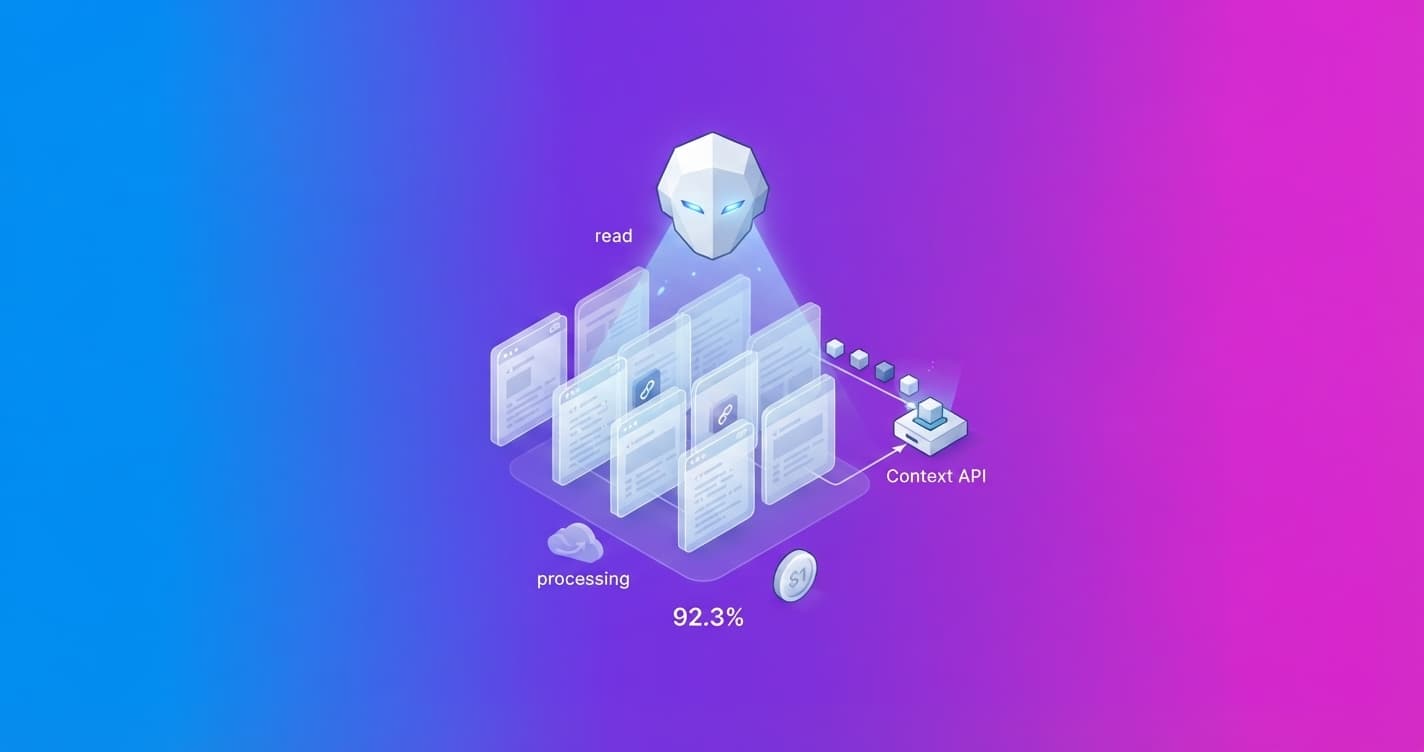
Perplexity has launched Context API, a tool that allows AI agents to read complete web pages without being limited to a search-result snippet or having to swallow a site's entire HTML code.
The API accepts up to 10 URLs per request and returns clean content in a format a model can use directly. It also reports when each page was retrieved and whether it came from a stored copy or a live request.
From snippets to full content
When a chatbot searches for information online, it usually receives small excerpts. They may point to the right page, but they often leave out important details: terms of use, exceptions, technical parameters, or pricing information.
Accessing the page directly does not always solve the problem. HTML usually includes menus, ads, cookie notices, and other elements that take up space and distract the model.
Context API aims to keep the relevant content. To create its Markdown version, it divides each page into blocks and uses a model to distinguish the main content from supporting material. It then keeps the blocks considered useful.
Developers can request four types of output:
- Markdown, with clean content ready to include in a model's context.
- HTML, so the application can process it independently.
- Links, as absolute, deduplicated URLs in the order they appear on the page.
- Relevant passages, selected based on a query and limited to the number of tokens defined by the developer.
In the last case, the API does not generate a summary. It selects original passages from the page related to the query. This reduces the amount of text the model must process without replacing the source's words with a generated explanation.
More control over data freshness
The tool also lets developers decide how much the information's freshness matters. By default, Context API looks for a copy of the page retrieved within the last two days in Perplexity's web index. If it does not find one, it makes a live request.
Developers can change this behavior depending on the task:
- Use
max_age_seconds: 0to always retrieve the current page, which is useful for prices, sports results, or breaking news. - Increase that period for documentation and other content that changes little.
- Set
cache_only: trueto prevent any live request.
Each URL is processed independently and in parallel. If one page takes too long or fails, the others can still finish. The status of each result makes it possible to retry only the problematic URLs.
What it is useful for in practice
The difference is especially noticeable when the answer depends on details that do not appear in a search engine:
- A coding agent can retrieve parameters, authentication instructions, and error cases from technical documentation.
- A shopping assistant can check current prices along with usage limits, billing terms, and eligibility requirements.
- A support agent can read a complete returns policy and identify exceptions by product or region.
- A research tool can compare articles and studies while taking their methodology and nuances into account, rather than just the headline or search snippet.
Results reported by Perplexity
Perplexity tested Context API with 1,000 URLs from 715 sites, including government agencies, academic sources, and pages in languages other than English. It compared the results with Firecrawl, Exa, Parallel, Keenable, and Context.dev using an evaluation model that did not know which provider had generated each output.
According to that evaluation, Context API:
- Returned usable content for 92.3% of the URLs.
- Retrieved 87.9% of the key data identified on the pages.
- Reached 80.3% precision in the content, meaning the proportion of text that actually belonged to the page rather than to ads, menus, or notices.
These figures were reported by Perplexity itself and depend on the sample and evaluation method. They do not mean that every page will always work well.
The announced price is $1 per 1,000 URLs processed. Only URLs that complete successfully are charged; failed URLs generate no cost.
For you, this means AI agents can move from finding a page to working with it more reliably. The next thing to watch will be how the tool performs with sites that block automated access, content that changes constantly, and sources whose structure makes it difficult to separate useful information from noise.