OpenAI unveils more than 20 AI updates at DevDay
OpenAI announced more than 20 updates at DevDay 2026, including continuously working agents, the `GPT-6.1 Sol` model, and new Codex features. ChatGPT is also becoming a space where people, teams, and applications can collaborate with AI.
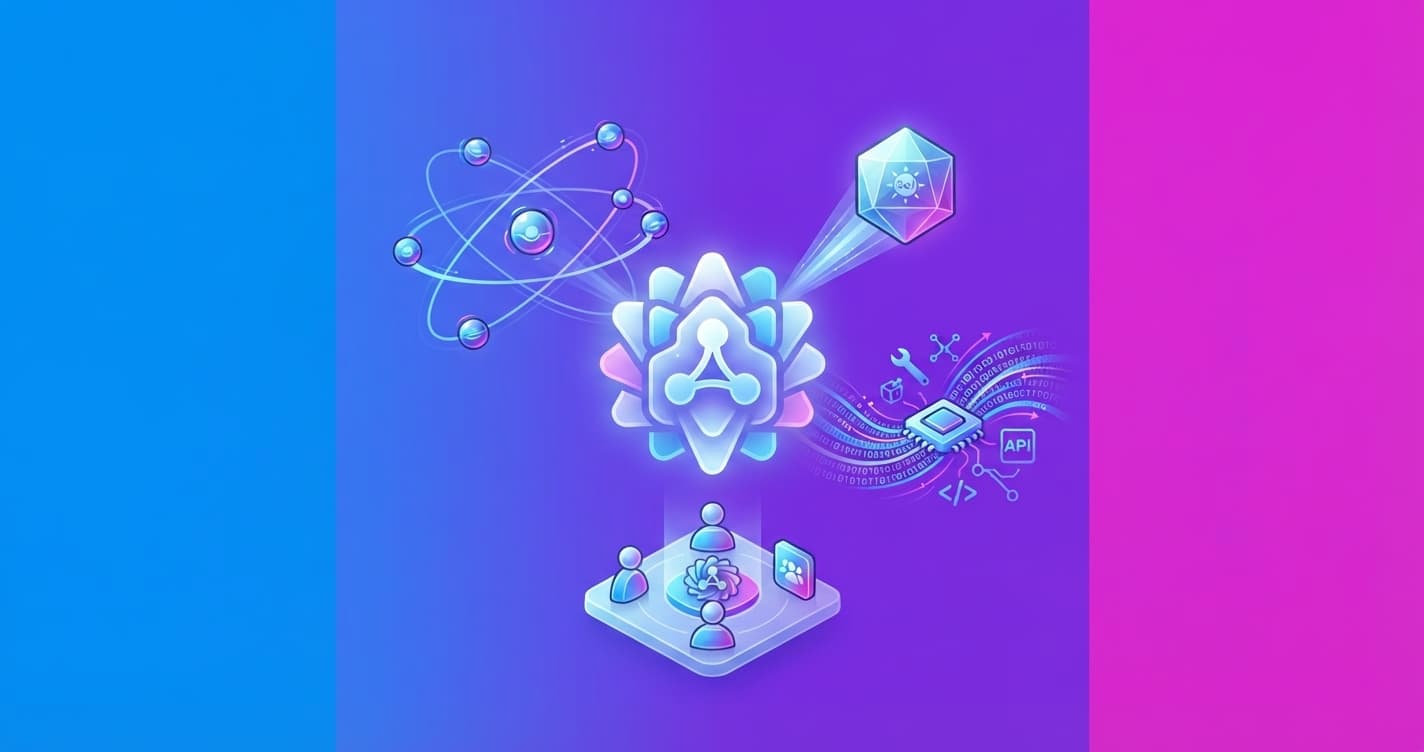
OpenAI announced more than 20 updates at DevDay 2026, including agents that can take on ongoing tasks, a new coding model, and tools that let ChatGPT work as a shared workspace for people and applications.
The company also opened up more parts of ChatGPT to third-party developers. Its goal is to let them build native experiences for a potential audience of 1.2 billion weekly users.
Agents that work continuously
The biggest update is Dots, agents that can take on ongoing responsibilities. Instead of responding only when you send an instruction, they can learn your priorities, maintain context, and keep working on tasks while you do something else.
For example, a Dot could organize project information, prepare regular updates, or monitor changes in connected tools. The feature will be available to Pro and Business Premium users in eligible markets. It will arrive in Enterprise, Edu, and Healthcare as a beta, and the workspace administrator will need to enable it.
OpenAI also introduced team tasks within ChatGPT. Users will be able to assign recurring work, such as preparing a weekly report, and have the system respond to events like a new email or a message in Slack.
GPT-6.1 Sol cuts the cost of agents
The new GPT-6.1 Sol improves on GPT-6 Sol for agentic coding, computer use, and professional tasks. OpenAI says it offers intelligence close to Astra at one fifth of the usual input and output token prices, where tokens are the units used to calculate model usage.
The price reduction is designed to let developers run more complex workflows without increasing their budgets. The model is available to API users and subscribers on the Plus, Pro, Business, Enterprise, and Edu plans.
Ultrafast, a premium speed tier, is also arriving. OpenAI says it can generate up to 300 tokens per second in Codex, with speeds up to eight times higher, and up to six times higher in the API. It is designed for tasks where waiting for a response directly affects the work.
Codex moves from writing code to coordinating tasks
Codex, OpenAI's coding tool, can run from a computer, remotely from a phone, or in the cloud. Reusable development environments will let teams share configurations and approved permissions.
Updates include:
- Voice control from the command line.
- An
/agentsview for delegating work and tracking multiple tasks. - Automatic code reviews in the cloud.
- Change analysis before sending them to GitHub or GitLab.
- Scheduled scans of entire repositories with
Codex Security Cloud.
In practice, a team will be able to leave a code review running even when the laptop is closed. The system can detect issues, remove duplicate findings, and prepare fixes for a person to review.
Agents will be able to use applications
The Agents API adds computer use. This lets developers create agents that interact with software and complete processes on a user's behalf, rather than limiting them to generating text.
OpenAI also added Codex features such as coordination between multiple agents, tool search and use, and automatic context reduction when a task runs long. It also worked with Amazon to offer managed agents that run directly inside AWS through Bedrock Managed Agents.
Another tool, Decisions API, is designed to make narrowly defined decisions in real time. The developer defines the questions and possible answers, provides text or images, and receives an output that can be used to classify content, route a request, or decide an agent's next step.
ChatGPT becomes a workspace
OpenAI is opening up the platform it uses to build ChatGPT features through extensions. Developers will be able to create interactive panels in the sidebar, file viewers, and experiences that run inside a conversation.
Users will remain in control of which extensions they activate and which permissions they grant. These tools can also be added to so-called Sites, spaces where teams share information and work with their own data.
The new Pages will be collaborative documents where people and agents can write, research, create charts, generate images, and organize information. Later, OpenAI plans to support interactive presentations that several colleagues and agents can edit at the same time and export to PowerPoint or Google Slides.
ChatGPT can also be mentioned with @ChatGPT in channels, threads, or direct work messages. The tool can use resources authorized by the administrator or by each user, without requiring every colleague to have an individual ChatGPT license.
More privacy, integrations, and plans
For businesses, OpenAI introduced Private Intelligence, a set of options for using its models with greater control over data. Zero Data Retention with private security processing allows content to be reviewed automatically without OpenAI staff accessing it. The company plans to introduce Private Inference in the fall, combining confidential computing with verifiable controls.
OpenAI also announced shareable profiles for discovering Sites, plugins, and skills created by other users. ChatGPT plans will work with 16 partner tools, including Devin, Notion, Vercel, and T3, with controls to limit usage.
For those who need more capacity, the new Pro 500 plan offers 25 times the usage included with ChatGPT Plus and access to Ultrafast. In the enterprise space, OpenAI will let some customers use part of their existing commitments to purchase approved software from partners such as Adobe, Figma, Salesforce, ServiceNow, CrowdStrike, and Palo Alto Networks.
DevDay 2026 shows where OpenAI wants to take its products: from a chatbot that responds to requests to a work layer where agents, applications, and teams collaborate. The important question now is how these automations perform on real tasks, what permissions they need, and how much control users retain when AI starts acting without constant supervision.