OpenAI launches GPT-5.2 for professional work
OpenAI introduces GPT-5.2, a family of models that improves coding, long-document analysis, image interpretation and tool use. According to the company, GPT-5.2 Thinking matches or outperforms professionals in 70.9% of evaluated tasks and is now available to paid users and API developers.
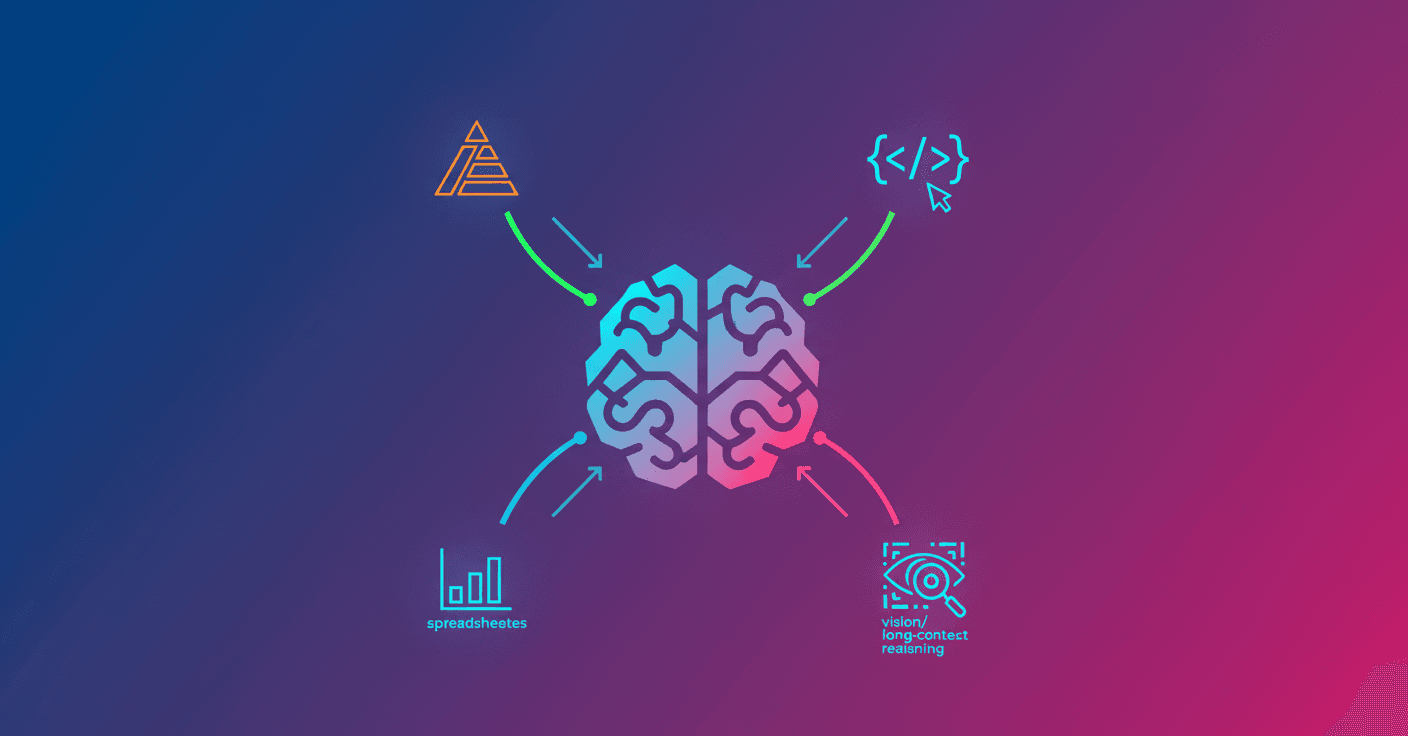
OpenAI has introduced GPT-5.2, a new family of models designed for professional tasks such as creating spreadsheets, preparing presentations, coding, analyzing lengthy documents and coordinating processes across multiple tools.
The company says GPT-5.2 Thinking is its most capable model yet for knowledge work. In an evaluation covering professional tasks from 44 occupations, it matched or outperformed industry experts in 70.9% of comparisons, according to human judges.
What changes from GPT-5.1
The improvement is not just about answering questions more accurately. GPT-5.2 is designed to complete work from start to finish with less manual intervention. For example, it can review information, generate a financial model, prepare a presentation and refine the result as you provide follow-up instructions.
OpenAI also says the model produces fewer incorrect answers. In a set of de-identified ChatGPT queries, incorrect responses were 30% less frequent than with GPT-5.1 Thinking. The company still cautions that the model can make mistakes and that you should review any important result.
The announced improvements include:
- Better spreadsheet and presentation creation and formatting.
- Greater ability to debug code, modify large projects and find bugs.
- Better understanding of long documents, images, charts and screenshots.
- More reliable tool use in multistep processes.
- More structured responses for research, planning and decision-making.
In internal financial modeling tasks for investment banking analysts, the average score rose from 59.1% with GPT-5.1 to 68.4% with GPT-5.2 Thinking.
More capacity for coding and working with long documents
On SWE-Bench Pro, a software engineering test that evaluates four languages and aims to represent problems closer to real-world work, GPT-5.2 Thinking scored 55.6%, compared with 50.8% for GPT-5.1. On SWE-bench Verified, which focuses on Python, it reached 80%, compared with 76.3% previously.
In practice, this points to a more useful assistant for fixing bugs in production code, implementing features, reviewing changes and working in large repositories. OpenAI also highlights progress in front-end development, including complex interfaces and 3D elements.
The model is also better at analyzing information spread across very long documents. In a variant of the MRCRv2 test, it achieved nearly 100% accuracy when locating four pieces of information spread across up to 256,000 tokens, a unit used to measure how much text the model can process.
That could be useful for reviewing contracts, reports, transcripts, research or projects with multiple files without losing track of important connections between different parts of the material.
Images, tools and complete tasks
GPT-5.2 Thinking is also OpenAI's best-performing model for visual tasks so far, according to the company. Its errors are reduced by approximately half on tasks involving chart interpretation and understanding software interfaces.
For example, it can help read a metrics dashboard, interpret a technical diagram or identify elements in a screenshot. It does not just recognize objects. It is also better at understanding their relative position within an image.
On Tau2-bench Telecom, an evaluation of tool use in long conversations, it scored 98.7%. This matters because many real-world tasks require chaining actions together: retrieving data, performing calculations, updating a system and delivering a final response.
One case described by OpenAI involves managing a trip with a delayed flight, a missed connection, a hotel stay and a medical need for special seating. The model coordinates rebooking, assistance and compensation in a single workflow.
Availability and price
In ChatGPT, GPT-5.2 Instant, GPT-5.2 Thinking and GPT-5.2 Pro are beginning to roll out to paid plans, including Plus, Pro, Go, Business and Enterprise. The rollout is gradual, so not everyone will see it at the same time.
Advanced spreadsheet and presentation generation features require a paid plan and the selection of GPT-5.2 Thinking or GPT-5.2 Pro. Some complex tasks may take several minutes.
In the API, the models are available to developers at these prices for gpt-5.2:
- 1.75 dollars per one million input tokens.
- 14 dollars per one million output tokens.
- 0.175 dollars per one million cached input tokens.
GPT-5.2 Pro costs 21 dollars per one million input tokens and 168 dollars per one million output tokens. OpenAI says that although the price per token is higher than GPT-5.1, the model's greater efficiency may reduce the cost required to achieve a result of a given quality.
GPT-5.1 will remain available for three months to paid ChatGPT users before being removed from that platform. In the API, OpenAI currently has no plans to retire GPT-5.1, GPT-5 or GPT-4.1.
For you, the most noticeable change will be a more useful ChatGPT when the work has several parts, many documents or external tools. The promise is not that it will no longer need supervision, but that it can handle a larger portion of the process without losing track. The next thing to watch is how much of these improvements holds up outside controlled tests and in everyday tasks, where errors and incomplete data still matter.