OpenAI brings GPT-6 to everyone with intelligent interfaces
OpenAI is bringing GPT-6 to ChatGPT with Intelligent UI, a feature that creates visual and interactive responses based on the task: maps, charts, forms and small tools. The rollout starts with paid plans and then reaches Free and Go, with web responses beginning 44% earlier on average according to internal tests.
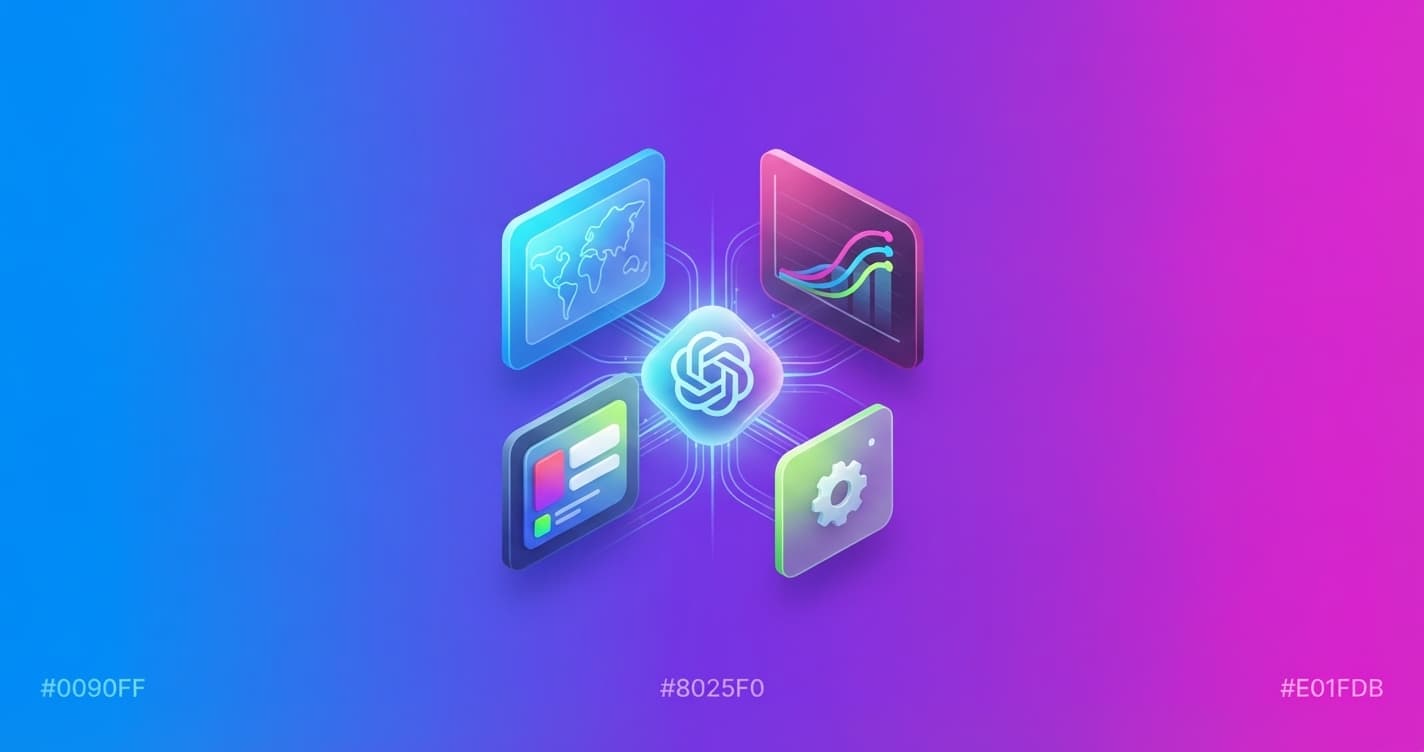
OpenAI is bringing GPT-6 to ChatGPT with a feature that can turn an answer into an interactive interface: charts, maps, forms, buttons and small tools created on the spot. The rollout starts today for paid plans and arrives tomorrow for Free and Go.
The idea is simple: instead of always replying with paragraphs, ChatGPT decides which format will help most based on what you ask. A comparison might appear in two columns, an explanation as a diagram you can explore, and a specific task as a calculator or form.
ChatGPT stops replying the same way every time
The new feature is called Intelligent UI. OpenAI has trained it to combine text, data and interactive elements within the same conversation.
For example, if you ask how to organize a dinner, it might show a menu with timings and quantities. If you are planning a trip, it can place the stops on a map. If you want to understand how your savings grow, it can create a calculator that lets you change the inputs and see the result.
You can also ask it to build a specific tool for the moment:
- A savings calculator.
- A bill splitter for a dinner.
- A simple game inside the chat.
- A visual outline for studying a complex topic.
You do not have to open another app or learn to use a new interface. Describe what you need and ChatGPT tries to build an experience around that task.
Responses arrive in stages
GPT-6 also changes how it responds. It can offer an initial answer and keep developing it afterward, instead of waiting to finish the entire process before showing anything.
This is especially relevant for questions that require reasoning or web searches. OpenAI says GPT-6 Instant starts responding 44% earlier, on average, than GPT-5.6 Instant when it needs to search for information on the web.
In an internal evaluation of everyday tasks that require agent capabilities, OpenAI says GPT-6 Extra High begins responding in roughly the same amount of time as GPT-5.6 Medium, but achieves a higher overall score than GPT-5.6 Extra High.
These are internal test results, not a guarantee that every response will be better or faster. The practical advantage will be more visible in long tasks, searches and processes that require several steps.
What changes for you
The difference is not just that the model knows more. It is that it can present information in a more useful way for each situation.
A recipe might include a preparation schedule. A physics explanation could let you change a variable and observe what happens. A plan could become an actionable checklist instead of remaining a set of general tips.
That also means you will need to review what appears on screen more carefully. An attractive interface does not guarantee that the data is correct. Figures, recommendations and results still require attention, especially when money, health or important decisions are involved.
Available in ChatGPT, not across all of OpenAI
GPT-6 with Intelligent UI begins rolling out globally in the chat tab for Plus, Pro, Business and Enterprise plans. Starting tomorrow, the rollout expands to Free and Go plans. In Enterprise, access depends on each organization's administrator settings.
- Plus, Pro, Business and Enterprise plans use
GPT-6 Sol. - Free and Go plans use
GPT-6 Luna. - Work and Codex models are not changing with this launch.
OpenAI also says GPT-6 improves risk detection, resistance to attempts to bypass its safety measures and the clarity with which it acknowledges its limitations. The company says it has strengthened protections against high-risk uses related to cyberattacks, biological threats and violence.
The important shift is that ChatGPT no longer has to limit itself to conversation. It can start becoming a tool that adapts to what you are trying to do. The question to watch is whether these interfaces will be genuinely clear and reliable, rather than simply more eye-catching.