Olmo 3 reveals shortcuts when answering about medications
A study of `Olmo 3` shows that the model can answer questions about medications based on endings such as `-pril` or `-olol` without demonstrating specific knowledge of the drug. Between 51% and 59% of the medications analyzed produced few signs of drug-specific knowledge, a finding with important implications for using AI in healthcare.
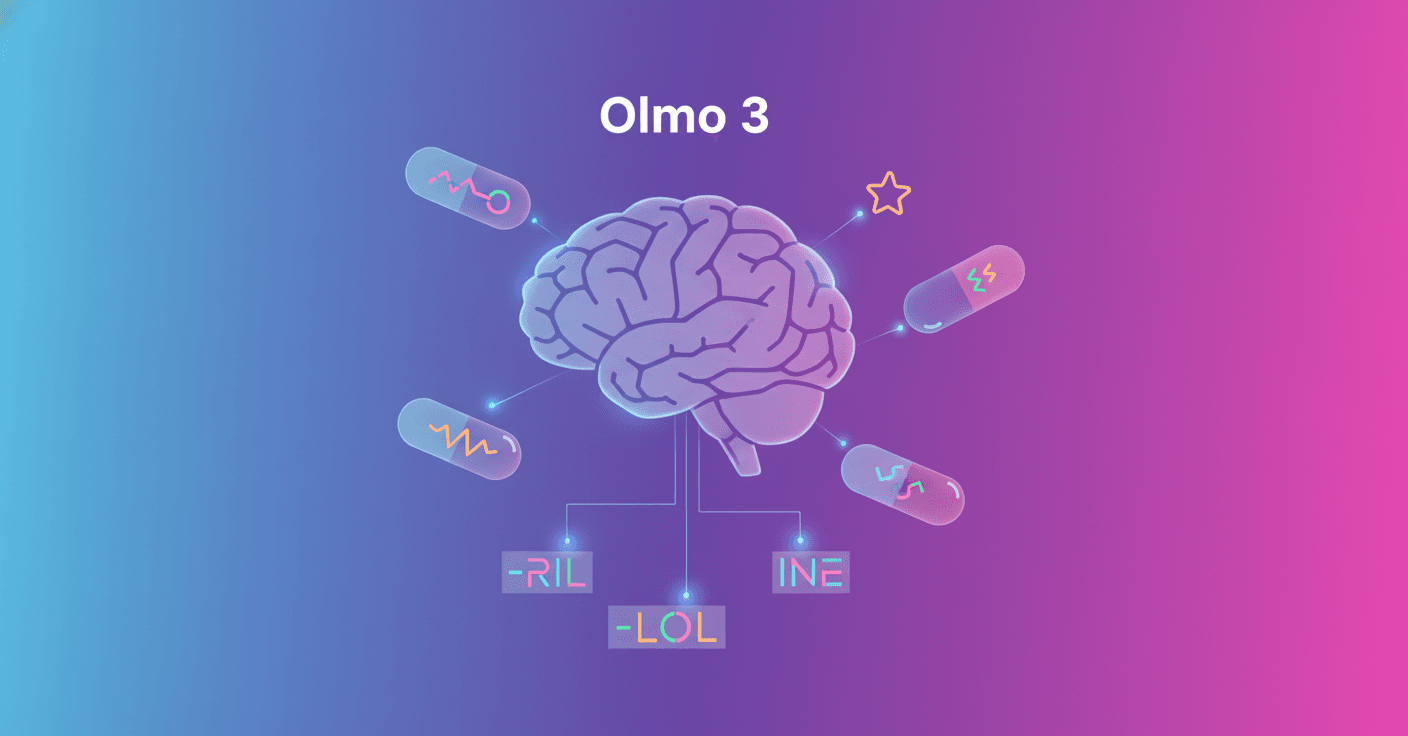
A study of Olmo 3 shows that an AI model can sound like an expert on medications without actually recognizing the drug it is discussing. In many cases, it answers based on the name, especially endings such as -pril, -olol, or -azoline.
The research was led by Kaijie Mo of the University of Texas at Austin, together with specialists from Northeastern University and MD Anderson Cancer Center. The team analyzed Olmo 3 7B Instruct, an open version of the model that allows researchers to examine both its answers and the data used to train it.
The shortcut is in the name
The names of many medications contain clues about their drug class. For example, a shared ending can indicate that several drugs have related effects or uses.
That can produce a reasonable answer in some cases. But it can also create an illusion of knowledge: the model recognizes the name pattern and completes the answer without knowing much about that specific drug.
To test this, the researchers separated three possible sources of information:
- The affix, such as the ending
-pril. - The stem, meaning the specific part of the medication's name.
- Actual knowledge about the drug.
They then replaced the stem, the affix, or both with invented strings that had no meaning. If the answer barely changed when the real name was replaced, that indicated the model was not using information specific to the medication.
The results show limited knowledge
Depending on the evaluation format, between 12% and 18% of the drugs analyzed produced answers driven by their affixes. In these cases, the model appeared to rely mainly on the ending of the name.
The broader result was even more striking: between 51% and 59% of the drugs showed few signs of specific knowledge. When the researchers compared the real name with an invented one, the answers were very similar.
In practice, this means that an answer that sounds precise could be based on a superficial clue. If you ask about a little-known medication, the model may infer its class from the name and present that inference as if it were verified information about the product.
Frequency in the data matters too
The team used infini-gram, a tool that can search for exact phrases in large datasets, to check how often each medication appeared in Olmo's training corpus and in what contexts.
They found a clear relationship: the rarer a drug was in the training data, the more likely the answer was to depend on its affix rather than on specific knowledge about it.
Using these endings is not necessarily an error. Medication affixes often contain real pharmacological information. The problem arises when that general clue replaces the specific data needed to safely discuss a dosage, an interaction, a side effect, or a medical indication.
Why it matters when you ask about health
For you, the consequence is simple: a fluent answer does not prove that the AI knows the medication you mentioned. In health-related topics, it is especially important to check:
- Whether the answer distinguishes between drugs in the same class.
- Whether it provides specific information about the medication, not just its broader family.
- Whether it acknowledges limitations or asks for context before making a recommendation.
- Whether the information matches what a healthcare professional or a reliable medical source says.
The study also points to a deeper problem: evaluating only the final text is not always enough. Because Olmo 3 is an open model, the researchers were able to connect its behavior to its training data and investigate where the shortcut might come from.
The lesson is not that AI cannot answer questions about medications. It is that its safety depends on distinguishing between recognizing a pattern and knowing a specific case. In medicine, that difference can turn a useful answer into a misleading recommendation. The next step will be to develop tests that detect this difference before the model reaches users.