NVIDIA launches Nemotron 3 Nano Omni for audio and video
NVIDIA introduces Nemotron 3 Nano Omni, an open model that understands text, documents, images, audio and video within the same context. It is designed to read lengthy reports, analyze recordings and control interfaces, with strong results on several tests published by the company.
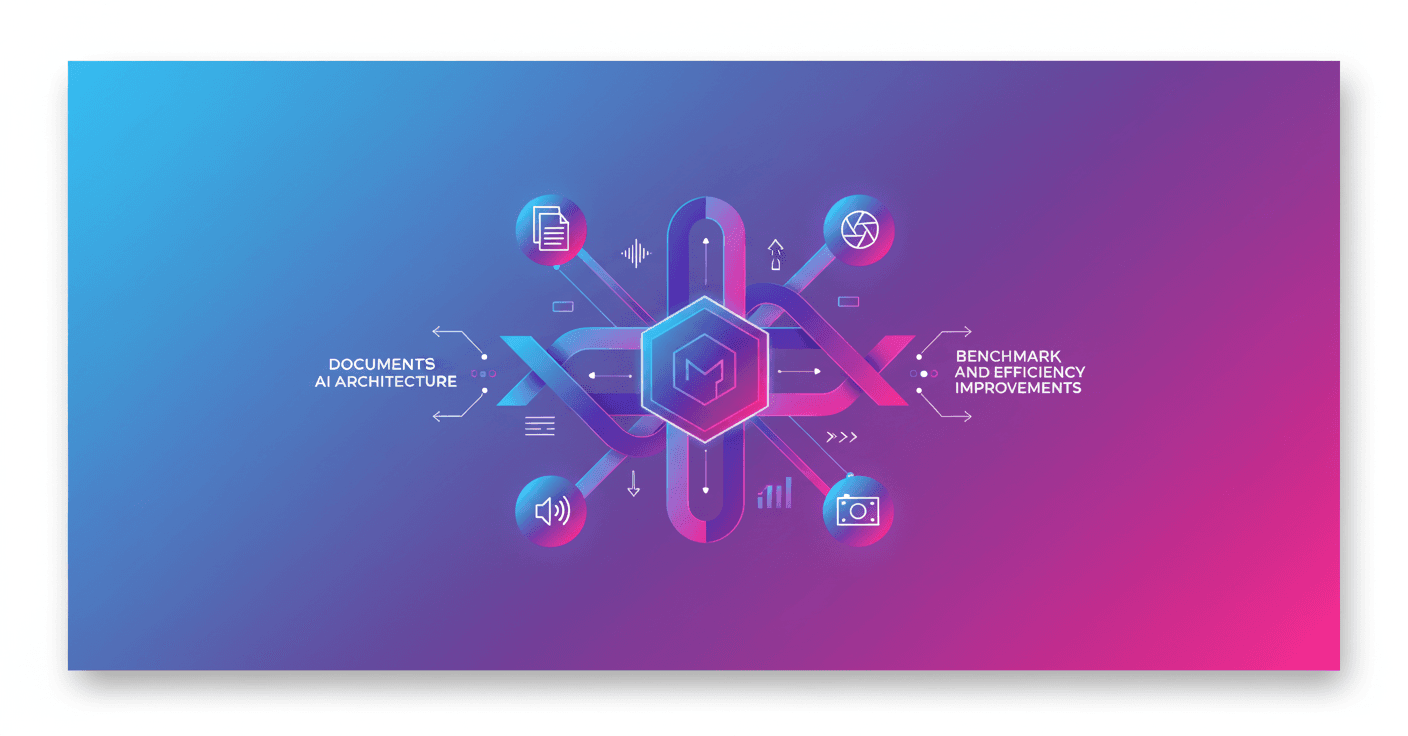
NVIDIA has introduced Nemotron 3 Nano Omni, an AI model that can analyze text, images, documents, audio and video within the same conversation. The company is positioning it for practical tasks such as reviewing contracts, understanding recorded meetings, reading complex tables and operating applications through their graphical interfaces.
It is not just an image recognition system with audio features added. Its goal is to connect what appears on screen with what is being said and with written information, even when the data is spread across lengthy documents or videos lasting several minutes.
What it can do
Nemotron 3 Nano Omni is designed for five main types of tasks:
- Analyze lengthy documents, including contracts, financial reports, manuals and technical articles of more than 100 pages.
- Transcribe and understand audio, even when there are multiple speakers, accents or background noise.
- Reason about videos, connecting a specific scene with what is being said at that moment.
- Interpret graphical interfaces, for example by locating buttons, tracking an application’s status and completing steps on a website.
- Solve problems using multiple information sources, such as combining text, charts, tables, images and audio to produce an answer.
In one example, the model receives a video about the Notre Dame fire and answers which building appears, how much its renovation cost and which images are shown while a witness speaks. In another, it navigates the Virginia Department of Motor Vehicles website to find the requirements for obtaining a driver’s license.
It can also compare a slide with a speaker’s oral explanation and point out which information appears only in the audio. That capability is useful for reviewing classes, meetings, presentations and training videos.
Better results with documents, video and speech
According to tests published by NVIDIA, Nemotron 3 Nano Omni outperforms earlier versions from the company itself and Qwen3-Omni 30B-A3B on several metrics. The results are not a guarantee for every use case, but they show which tasks the training focused on.
- On MMLongBench-Doc, which measures long-document understanding, it scores 57.5 points, compared with 49.5 for Qwen3-Omni.
- On OCRBenchV2-English, which focuses on reading text in images, it reaches 65.8 points.
- On Video-MME, a video understanding test, it scores 72.2 points, compared with 70.5 for Qwen3-Omni.
- On WorldSense, which combines video and audio, it scores 55.4 points, compared with 54.
- On VoiceBench, which focuses on speech understanding, it reaches 89.4 points.
NVIDIA also says it offers up to 9 times more performance and up to 2.9 times higher single-session reasoning speed than some alternatives in multimodal use cases. In specific scenarios involving multiple documents and video, the company calculates system efficiency that is 7.4 and 9.2 times higher, respectively. These comparisons were made under specific conditions, not as a universal measure of speed.
How it works
The model combines three main components: a Nemotron 3 Nano 30B-A3B language base, a C-RADIOv4-H vision encoder and a Parakeet-TDT-0.6B-v2 audio encoder. The encoders convert images and sound into information that the language model can process alongside text.
For documents and images, it uses variable resolution that preserves more detail when needed to read a table, formula or screenshot. In video, it groups pairs of frames and removes repeated sections, such as a background that remains still. This reduces the amount of information it has to process without discarding important changes.
The system was trained on audio inputs of up to 20 minutes, while its maximum context allows it to work with more than five hours of combined information. NVIDIA also generated around 11.4 million synthetic question-and-answer pairs from real documents. The company attributes a 2.19-fold improvement on MMLongBench-Doc to this dataset.
What this changes for you
If integrated into an application, this model could let you upload a complete report and ask about figures spread across different pages, query a meeting recording without watching the whole thing or request a summary that connects slides with participants’ comments.
For businesses, combining documents, audio, video and interface use opens the door to assistants that not only answer questions, but also search for information and complete steps. Even so, sensitive tasks, such as interpreting contracts or making administrative decisions, will still need human review.
NVIDIA has published versions in BF16, FP8 and NVFP4 formats on Hugging Face, along with parts of the training code and resources for creating data. The important question now is how it performs outside selected examples and how much it costs to run on real-world hardware. The trend is clear: multimodal models are no longer limited to describing an image. They are beginning to work with the full context surrounding a task.