JetBrains Introduces Mellum2, a 12B AI Model
JetBrains has introduced Mellum2, an open 12-billion-parameter model for text and code. Its architecture activates only 2.5 billion parameters per token and, according to the company, delivers competitive performance with inference speeds more than twice as fast as similar models.
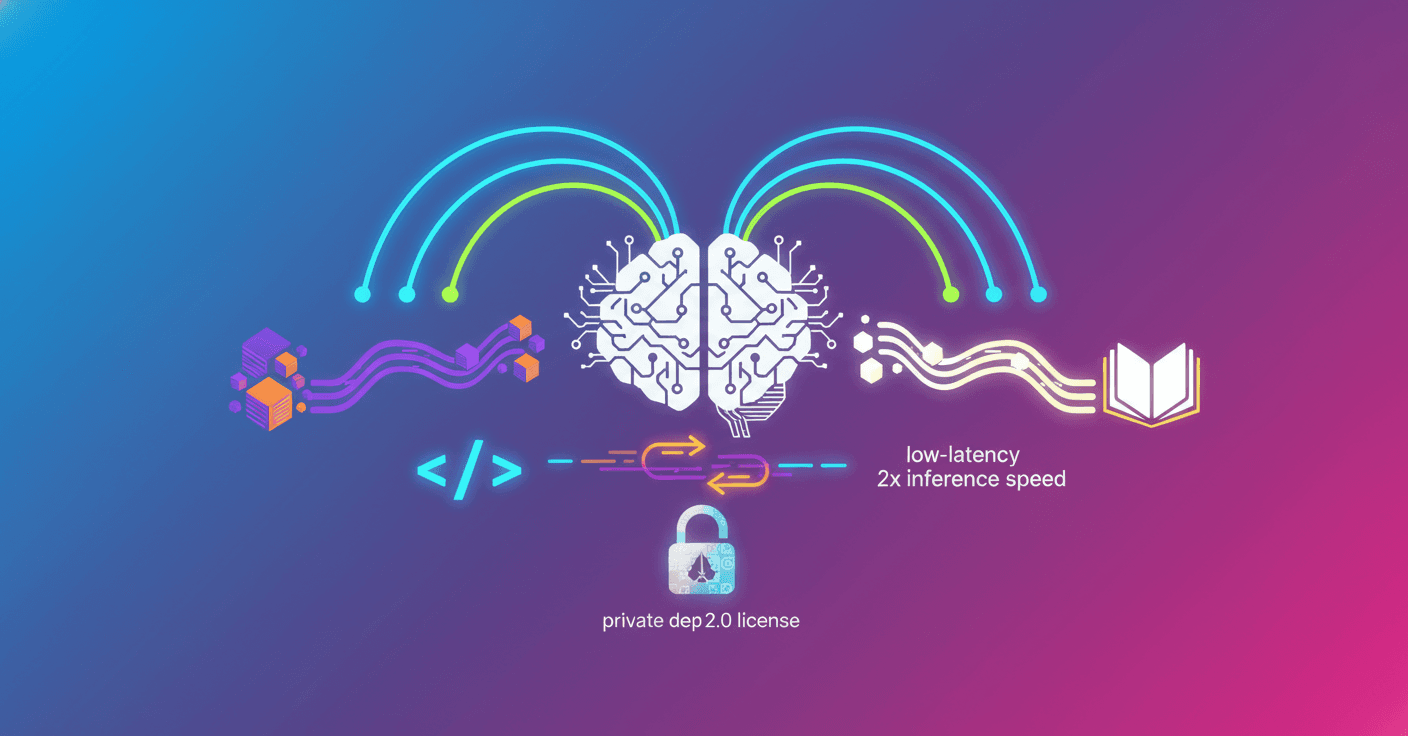
JetBrains has introduced Mellum2, an open 12-billion-parameter AI model designed to work with text and code without adding excessive wait times. Its key feature is that it activates only 2.5 billion parameters per token, meaning each fragment of text it processes.
The goal is to combine capability and speed. According to JetBrains, Mellum2 delivers competitive performance against open models of a similar size and achieves inference speeds more than twice as fast. Inference is the stage when a model generates a response, completes code, or transforms information.
A large model that does not use everything at once
Mellum2 uses an architecture called Mixture-of-Experts. Instead of activating the entire network for every request, the system selects only some of its components based on the task at hand.
This makes it possible to maintain a total capacity of 12 billion parameters while processing each token with a much smaller fraction. In practice, this can reduce latency, increase the number of requests handled, and keep operating costs under control in services that receive many requests.
It is not a multimodal model: it focuses on natural language and programming. This specialization allows it to stay focused on software engineering tasks and deployments where speed matters more than having a model capable of processing everything.
What it can be used for
JetBrains presents Mellum2 as one component within larger AI systems, not as a universal replacement for the most powerful models. Its uses include:
- Classifying requests and choosing which tool or model should respond.
- Summarizing and compressing information before sending it to another system.
- Preparing context in retrieval-augmented generation applications, known as
RAG. - Running agent subtasks, such as planning, validating, or transforming code.
- Managing programming features inside an IDE handling many simultaneous requests.
- Processing code or internal data on its own servers, without sending it to an external provider.
A simple example: a coding agent can use a large model to solve a complex problem, but turn to Mellum2 to classify the task, select a tool, summarize files, or check a response. These intermediate tasks are common and do not always require the most expensive model.
An open model for private deployments
Mellum2 is released under the Apache 2.0 license, a permissive license that makes it easier to use, modify, and distribute, including in commercial projects subject to their own legal terms.
The model is available on Hugging Face, along with the information needed to try it. JetBrains has also published a technical report covering the architecture, training, testing, and evaluation methodology.
The central idea is clear: many AI systems do not need a single gigantic model for every step. They need several specialized components that work quickly and share the workload. Mellum2 is aimed precisely at that space: frequent text and code tasks where every millisecond, every request, and every piece of private data matters.