GPT-5 cuts the cost of producing proteins
GPT-5 reduced the cost of producing a protein by 40% while working with an automated laboratory. The system tested more than 36,000 combinations and learned from each round, although the result is still limited to one protein and one specific system.
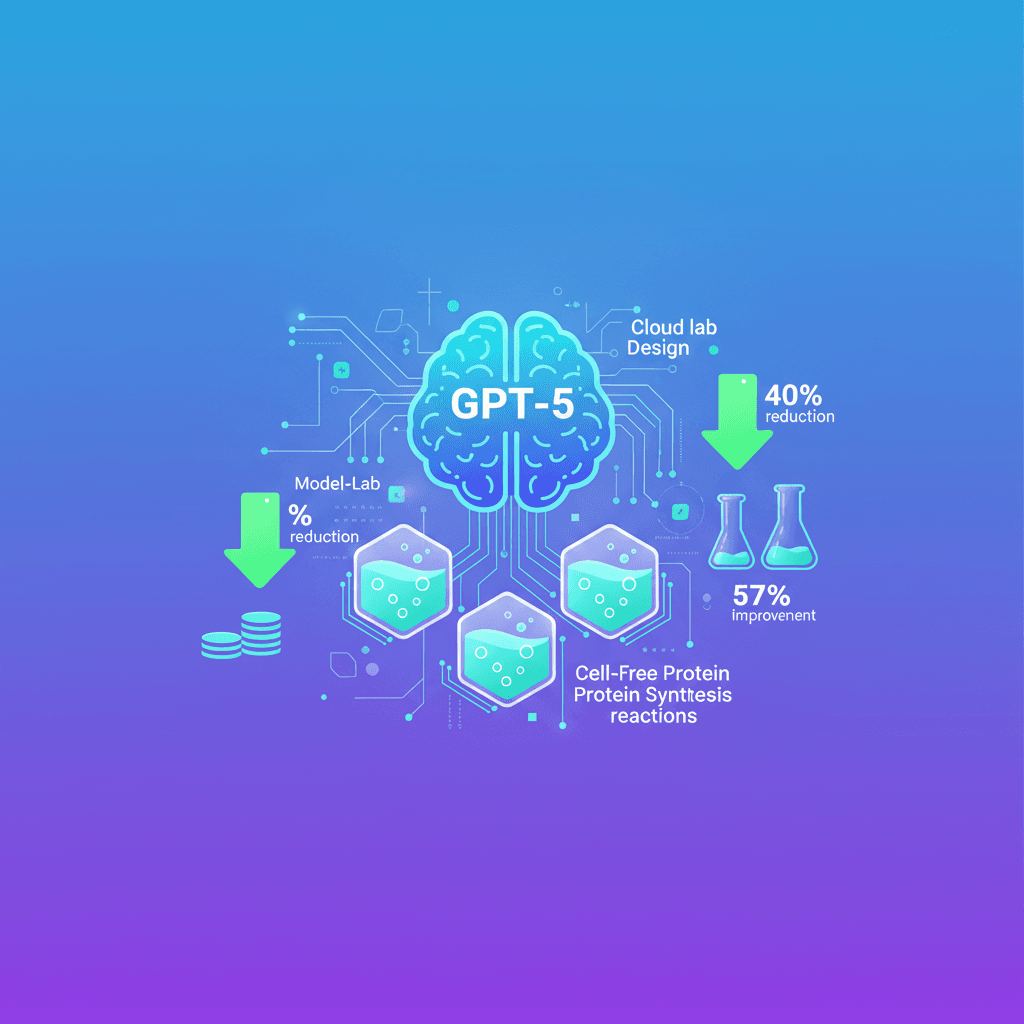
GPT-5 reduced the cost of producing a protein in an automated laboratory by 40%, according to an experiment by OpenAI and Ginkgo Bioworks. To achieve this, the system designed tests, analyzed the results and decided what to experiment on next, while robots carried out each round.
The work focused on cell-free protein synthesis, a technique for producing proteins without growing living organisms. Instead of putting DNA into a cell and waiting for it to do its job, researchers place the DNA in a controlled mixture containing the machinery needed to produce the protein.
It is a useful tool for testing many ideas quickly. Proteins are used in medicines, diagnostic tests, research and industrial processes, as well as everyday products such as detergents. If they cost less to produce, scientists can evaluate more options before investing in expensive development.
A laboratory that learns from every experiment
OpenAI connected GPT-5 to Ginkgo Bioworks' cloud laboratory. It is a facility that can be controlled through software: robots prepare the mixtures, run the reactions and send the data back to the model.
The cycle worked like this:
- GPT-5 designed a group of experiments.
- The automated laboratory ran the tests.
- The results were sent back to the model.
- GPT-5 analyzed the data and proposed the next round.
The system repeated this process over six rounds. In total, it tested more than 36,000 different compositions across 580 automated plates. Before each test was run, a validation system checked that the design could actually be carried out by the robots. This prevented experiments that looked reasonable on paper but were impossible to perform in the laboratory.
With access to a computer, a browser and relevant scientific papers, GPT-5 needed three rounds and two months to reach the result that OpenAI presents as a new record for low-cost cell-free protein synthesis. Production cost 40% less than the previous best benchmark. OpenAI also reports a 57% improvement in reagent costs.
The key was not just spending less
Cell-free synthesis combines DNA, cell extracts and numerous ingredients, such as salts and energy sources. They all interact, so changing one component can alter the effect of the others. Human intuition is not enough to explore every possible combination.
GPT-5 found low-cost mixtures that, according to OpenAI, had not previously been tested in that configuration. It also identified combinations that worked better under the conditions of an automated laboratory, where reactions contain less oxygen and are mixed differently than in a conventional test tube.
That detail matters. A mixture that works well by hand can perform worse in a plate with hundreds of small compartments. The model proposed formulations that were more resilient under those conditions. It also detected that small changes to buffering systems, energy regeneration and polyamines could have a significant effect on the result.
The biggest savings did not necessarily come from replacing every ingredient with a cheaper one. In this system, the components that contribute most to the cost are the cell extract and the DNA. Producing more protein with the same amount of those materials is therefore the strategy with the greatest impact.
What it means for you
The result does not mean that GPT-5 can already design any protein or that human laboratories are no longer needed. The test used a single protein, sfGFP, and one cell-free synthesis system. It still needs to be determined whether the improvements hold up with other proteins, equipment and conditions.
Human operators were also still needed to improve the protocols and handle the reagents. AI could propose and analyze experiments, but the physical laboratory work still depended on experienced people.
The important point is the workflow: an AI can explore thousands of options, an automated laboratory can test them and the results can feed into the next decision with almost no pauses. In biology, where progress often depends on repeating expensive experiments, that combination could accelerate the search for treatments, diagnostics and industrial processes.
It also raises a concern that cannot be ignored: the same capabilities that help optimize biological processes can have implications for biosecurity. OpenAI says it is assessing those risks and developing safeguards. The next step will be to determine whether this method works beyond a controlled case and how far it can go without increasing risks that are difficult to monitor.