Google measures how AI is used in the economy
Google presents ATLAS, a study based on 15 million AI interactions across more than 150 countries. Its initial data shows that AI is being used in many jobs, usually as support for specific tasks, and that most of its activity takes place outside the workplace.
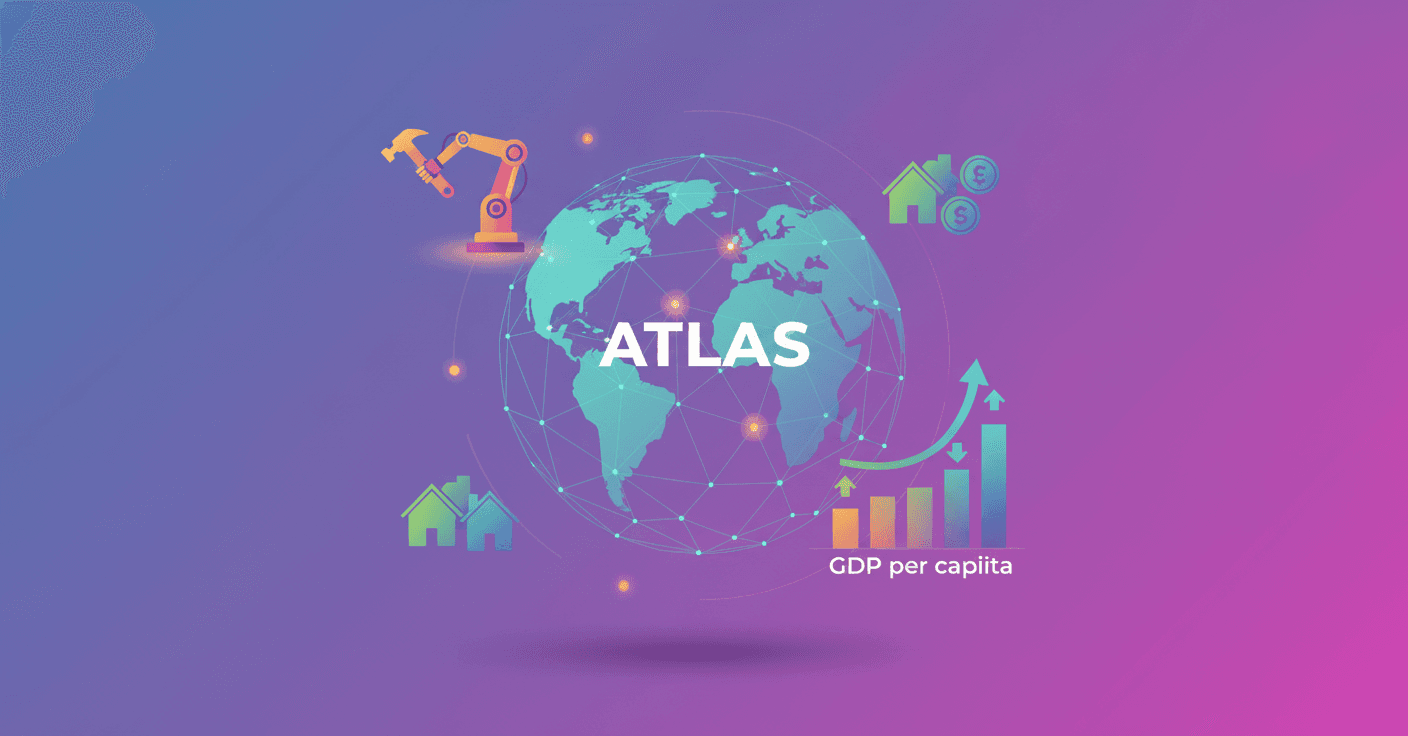
Google has analyzed 15 million AI interactions to understand how people are using AI at work and in daily life. The study covers more than 150 countries, 140 languages, 800 professions and 4,000 types of tasks.
The project is called AI & Economy ATLAS and is based on aggregated, de-identified conversations from Gemini, AI Mode and the Gemini API. Google presents this first version as an initial snapshot of how people use its tools, not as a definitive prediction of the future of work.
AI is already present in many jobs, but selectively
Work-related use appears across all sectors and reaches 68% of occupations that together account for 90% of employment in the United States. But that does not mean AI is doing most of every job.
In a typical occupation, it is used for around 21% of tasks. Most interactions involve working with a person rather than replacing them completely: generating ideas, finding information, preparing strategies, learning or reviewing alternatives.
Tasks related to creative design and testing hypotheses appear in work conversations much more often than in the economy as a whole: 65% versus 35%. By contrast, fewer than 10% of the analyzed work interactions automate a task from start to finish.
That points to something closer to an on-demand assistant than a machine taking over an entire job.
It also helps people who work with their hands
AI use is not limited to offices and professions traditionally considered intellectual. Mechanics, automotive technicians and industrial maintenance workers use it to solve problems as they arise.
For example, they can ask for help interpreting test results, locating a fault in electrical wiring or assessing the wear on a part. When these workers use Google's tools, they are twice as likely to use multimodal features, which can work with images or video as well as text.
AI does not necessarily perform the physical task, but it can provide information during diagnosis and reduce the time needed to find a solution.
Most use happens outside work
More than 86% of the interactions included in ATLAS take place outside the workplace. People use AI for activities that usually fall outside standard economic statistics, even though they consume time and effort.
These include:
- Comparing products before buying.
- Understanding how to use an appliance or tool.
- Handling tasks related to taxes, licenses or fines.
- Finding information to organize household tasks.
This matters because some of AI's value may appear first in daily life rather than in traditional productivity indicators. Saving an hour on an administrative task is not always recorded as economic growth, even though it changes the experience of the person doing it.
Access is still linked to wealth
ATLAS detects AI use in more than 150 countries and territories representing 99% of the world's population. English accounts for only about one-third of the conversations analyzed, and users continue to rely on their native languages even for complex tasks.
Even so, use per person tends to follow each country's level of wealth. This suggests that the digital divide could also become an AI access gap. There are exceptions: some middle-income countries in South America and the Middle East show adoption levels comparable to those of wealthier economies.
What the study can and cannot show
Google says the data was protected through several layers: removing personal information, automatically stripping out sensitive references, separating the data from the original records and grouping the results so they represent multiple users.
But the study has limits. It only observes use of certain Google tools and excludes products such as Google Workspace, Google Translate, AI Overviews and several enterprise platforms. It also does not yet measure the full economic impact of more advanced systems, such as agents capable of programming on their own.
For you, the main signal is clear: AI is already being incorporated into many tasks, but usually as partial support. What needs watching now is whether that pattern holds, whether automation increases and whether access expands to the countries and workers currently being left behind.