Google launches TranslateGemma: AI for 55 languages
Google introduces TranslateGemma, an open family of AI models that translates 55 languages in versions with 4B, 12B and 27B parameters. The company says the 12B model outperforms a 27B model in its tests, while the 4B version can run on mobile devices and hardware with limited resources.
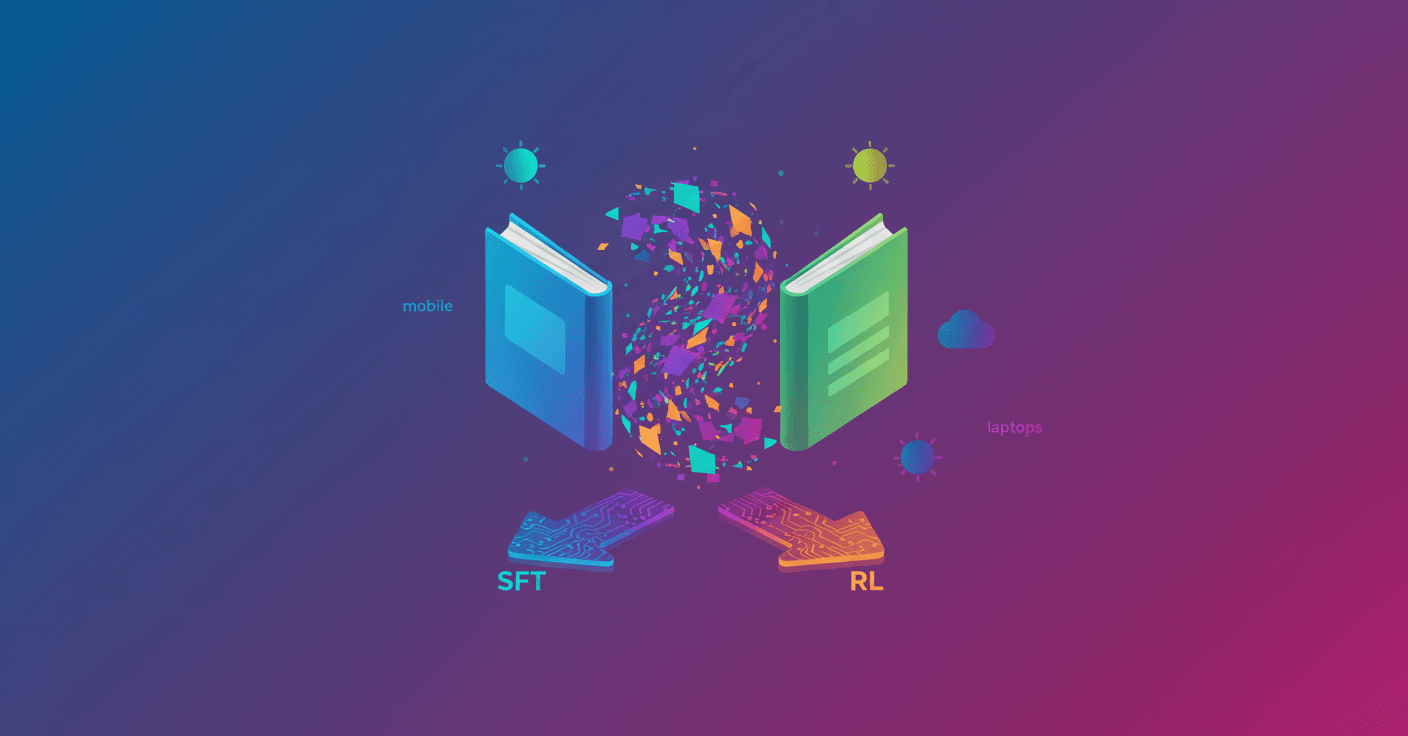
Google has introduced TranslateGemma, a new family of open AI models for translating text across 55 languages. It is available in three sizes: 4B, 12B and 27B, where the number indicates how many billions of parameters each model has, a reference to its capabilities and resource requirements.
The aim is to bring high-quality translation to more devices, including mobile phones and personal computers. The models are built on Gemma 3, Google's open model family, and combine knowledge distilled from Gemini models with a more compact design.
A smaller model that outperforms a larger one
According to Google's technical tests, TranslateGemma 12B outperforms Gemma 3 27B on the MetricX benchmark within the WMT24++ evaluation suite. In practical terms, this means a model with less than half as many parameters can deliver better results than a significantly larger version, at least in that specific test.
The 4B model also achieves performance similar to the reference Gemma 3 12B. That makes it a particularly interesting option for mobile devices and other hardware with limited resources.
For anyone building an application, the difference can show up in three areas:
- Lower memory and computing requirements.
- More translations processed in the same amount of time.
- Less response delay, especially in local services or those with many users.
Google evaluated TranslateGemma with WMT24++, a dataset covering 55 languages and several language families. The company says the models reduced error rates compared with Gemma 3 in every language evaluated, including some with less data available for training translation systems.
Training with human data and Gemini
TranslateGemma was trained in two stages. First, Google fine-tuned the models with parallel texts, meaning documents and their corresponding translations. The dataset combined human translations with synthetic translations generated by Gemini models.
It then applied reinforcement learning, a technique that guides a model's behavior using systems that score its responses. In this case, Google used several metrics to favor translations that were more accurate, natural and appropriate to the context.
The company also trained the models on almost 500 additional language pairs. However, it has not yet published confirmed evaluation metrics for this broader group. For now, this part mainly serves as a foundation for researchers and developers to create their own adaptations, especially for low-resource languages.
Image translation and local use
TranslateGemma retains Gemma 3's multimodal capabilities. This also allows it to work with text that appears inside images, such as signs, menus and scanned documents. In Google's tests on the Vistra dataset, improvements in text translation also benefited this task, although TranslateGemma did not receive specific multimodal fine-tuning during training.
Each version is designed for a different environment:
4B: mobile phones and edge devices.12B: personal computers and local development environments.27B: maximum fidelity, with the ability to run on an H100 GPU or a cloud TPU.
For you, the importance is not just the ability to translate more languages. TranslateGemma is designed to let some translations run directly on your device, without sending every sentence to a server. That can improve privacy, reduce dependence on a connection and lower the operating cost of applications, although the final result will depend on the language, hardware and use case.
The next step will be seeing how these models perform outside Google's tests, especially across the almost 500 language pairs that still have no public metrics. That will show whether the promise of open, efficient translation also extends to languages that are often left out of mainstream tools.