Google introduces Gemini Robotics ER 2 for robots
Google introduces Gemini Robotics ER 2, a model that coordinates robots, interprets video in real time and adjusts its actions when something goes wrong. It is already available to developers through the Gemini API and Google AI Studio, with robot collaboration features and safety controls.
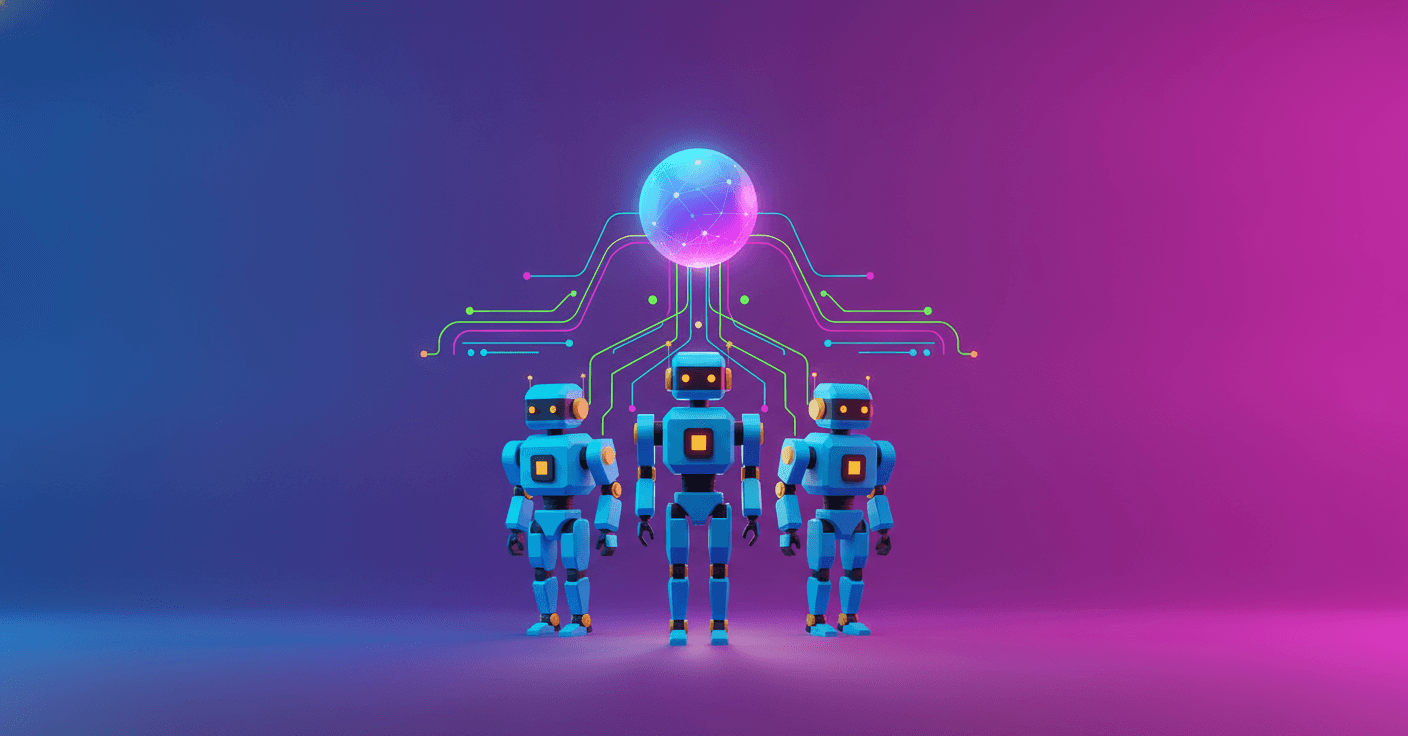
Google introduces Gemini Robotics ER 2, a model designed to help robots understand what is happening around them, plan multi-step tasks and react while carrying them out. The company describes it as a high-level brain: it decides what to do and delegates specific movements to other specialized systems.
The difference is response time. A robot cannot stop for several seconds to think every time someone moves, an object falls or a task goes wrong. That is why this model combines reasoning with continuous video, audio and text streaming to make decisions while the robot is acting.
A brain that coordinates other systems
Gemini Robotics ER 2 does not directly control every motor. It can use VLA models, short for vision-language-action, as tools that turn an instruction and what the robot sees into physical movements. It can also call navigation APIs, developer-built functions or services such as Google Search.
This approach makes it possible to break a complex task into steps. For example, when told to find a snack, the model can locate the object, plan a route, ask a movement system to pick it up and then check whether the action succeeded.
Google tested this coordination with Spot, Boston Dynamics' quadruped robot. In the demonstration, Spot receives a natural-language command and combines its navigation and manipulation functions to bring back an object.
The model also integrates with the Gemini Live API, a bidirectional streaming interface optimized for fast responses. The goal is to avoid the abrupt pauses of systems that act, stop to reason and then act again.
The robot knows how far it has progressed
One of the practical challenges in robotics is knowing when an action is actually finished. Seeing a hand hold a light bulb does not mean the bulb has been properly tightened. Likewise, starting to tie a garbage bag does not guarantee that it has been closed.
Gemini Robotics ER 2 analyzes continuous video to estimate task progress and detect the exact moment when an important event occurs. It can correct a failed step, retry it without restarting the entire process and move on to the next action when appropriate.
In Google's evaluations, the model achieved:
- 57.4% accuracy when classifying task progress across five levels, from 0-20% to 80-100%.
- 91.3% accuracy when finding the exact moment of an event in a video.
- An average distance of 0.96 seconds from the correct moment in those detection tasks.
According to Google, this ability to find specific moments works with four times lower latency than categories of larger models. In a robot, that difference can determine whether it stops pouring liquid in time or keeps going and causes a spill.
Multiple robots can divide the work
The model also adds collaboration between robots. A wheeled machine may move better indoors, while a humanoid robot may handle uneven terrain more effectively. With a shared understanding of the task, both can communicate, transfer objects and complete a workflow that would be difficult for one robot alone.
Google demonstrates this approach with Apptronik's Apollo 2 and Franka F3 Duo. The idea is not for every robot to do the same thing, but for each one to contribute its capabilities to the same goal.
More attention to failures and safety
The update expands the model's spatial reasoning. It can now detect failures directly in video, such as spills, slips or misalignments, and read more types of instruments, including:
- Digital displays.
- Linear scales and rulers.
- Liquid thermometers.
- Circular dials and level indicators.
Google also says that Gemini Robotics ER 2 performs better in tests involving safety instructions and human proximity. In one evaluation, the humanoid robot stops when a person approaches and resumes work only when the area is clear again.
The model is already available to developers through the Gemini API and Google AI Studio. It is also coming in private preview to the Gemini Enterprise Agent Platform.
For you, this does not mean household robots will autonomously handle any task tomorrow. It does point to an important shift in their development: moving from robots that execute isolated commands to systems capable of observing, coordinating tools, checking results and asking for help when a situation is unclear. What remains to be seen is whether these capabilities hold up outside demonstrations, in real-world environments with people moving around them.