

Google introduces Gemini Decisions API for AI
Google has introduced Gemini Decisions API, a service that evaluates closed-set options using text, images, audio, video, and PDFs. It returns probabilities in 150 to 250 milliseconds, at $0.10 per million input tokens with no charge for output tokens.
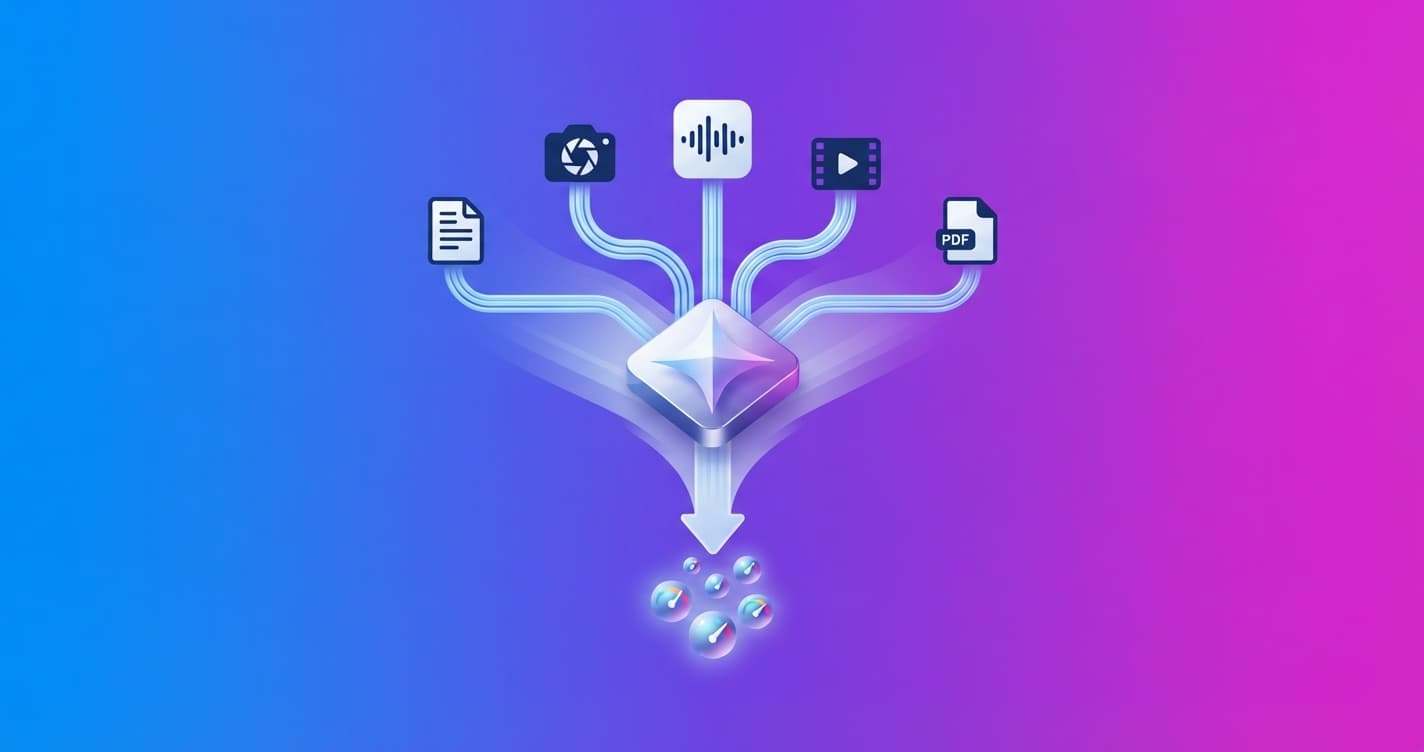
Google has introduced Gemini Decisions API, a service designed to make closed-set decisions in milliseconds: choose an option, check a rule, or decide which model should respond to a query. The tool works with text, images, audio, video, and PDFs, and is already available through the Gemini API in Google AI Studio.
The difference lies in how it responds. Instead of generating text word by word, Gemini Decision 1 scores the options you provide and returns probabilities and a confidence level. Google puts total latency between 150 and 250 milliseconds, at a cost of $0.10 per million input tokens, with no charge for output tokens.
Specific decisions instead of open-ended answers
The API is designed for problems with a limited set of possible answers. For example:
- Choose which tool an agent should use.
- Check whether content complies with a policy.
- Send a query to the most suitable model.
- Classify the severity of an incident.
- Assess whether an image, recording, or document meets specific criteria.
You can send a shared multimodal input of up to 256,000 tokens, together with up to 1,000 independent questions. A company could use this to analyze a call and account data at the same time, or review an insurance claim alongside photographs of the damage.
Each question can use one of three formats:
- Yes or no: estimates the probability that a condition is met.
- Multiple choice: chooses between 2 and 255 alternatives and returns the probabilities for all of them.
- Score: assigns a value within an ordered scale, such as a severity rating from 0 to 2.
The response includes a confidence score between 0 and 1. This allows a program to act automatically when the result is clear and route uncertain cases to another tool or a person.
A simple example
Imagine a photograph of the countertop in a break room and a note stating that the space must be ready before a meeting. The API can determine in a single call whether there is a spill, decide whether cleaning it is enough or whether the maintenance team needs to be sent, and score the severity of the problem.
The same approach can be used to review documents, detect suspicious behavior, or classify customer queries. The company does not need to train its own classifier for every case: it defines the options and criteria it wants to evaluate.
Faster and cheaper for narrowly defined tasks
According to tests shared by Google, Gemini Decision 1 delivered the best performance across the company’s benchmark suite for agent routing, reasoning, classification, and multimodal understanding, as well as the lowest calibration error. Calibration measures how closely its probabilities reflect the actual frequency of correct answers.
The model maintains 50 to 100 milliseconds of internal processing as the median for multimodal inputs of up to 16,000 tokens. That time changes very little when moving from one to 100 questions in the same request. Google also says it is nearly five times cheaper than Gemini 3.5 Flash-Lite with the Interactions API on this benchmark suite.
Where it is being used
Google points to several internal uses of the tool:
- Gemini Notebook uses it to route each query to the appropriate model and reasoning level. For simple questions, this can reduce latency by up to 40%.
- Stitch uses it to generate workflow prototypes and apply changes made by voice or through taps.
- CC, from Google Labs, quickly selects an emoji from more than 200 options.
- Google Search uses it as a security layer to detect adversarial behavior and content in MCP tools.
For you, the most visible change will not necessarily be a new application, but services that react sooner and make more consistent decisions in the background. An assistant could choose a powerful model only when needed, an insurer could review thousands of images using consistent criteria, and a support system could automatically separate simple cases from those requiring human intervention.
Gemini Decision 1 includes a free tier for testing in Google AI Studio. Pricing is calculated once for the shared input, even when it contains multiple questions, with no additional charges for output tokens, reasoning, audio transcription, or OCR. Integrations with OpenRouter, LangChain, Vercel, LiteLLM, and other platforms are being rolled out gradually.
The key question will be whether these probabilities remain reliable outside benchmarks and in real-world situations. If they do, the API could become a control layer for AI agents: less generated conversation when all that is needed is to choose, classify, or trigger the next step.