

Claude uses AI to design proteins against scorpion venom
Claude generated 318,484 protein designs targeting five scorpion neurotoxins. Of the 211 candidates tested in the laboratory, 17 bound to one toxin, but none has yet been shown to neutralize venom or protect animals.
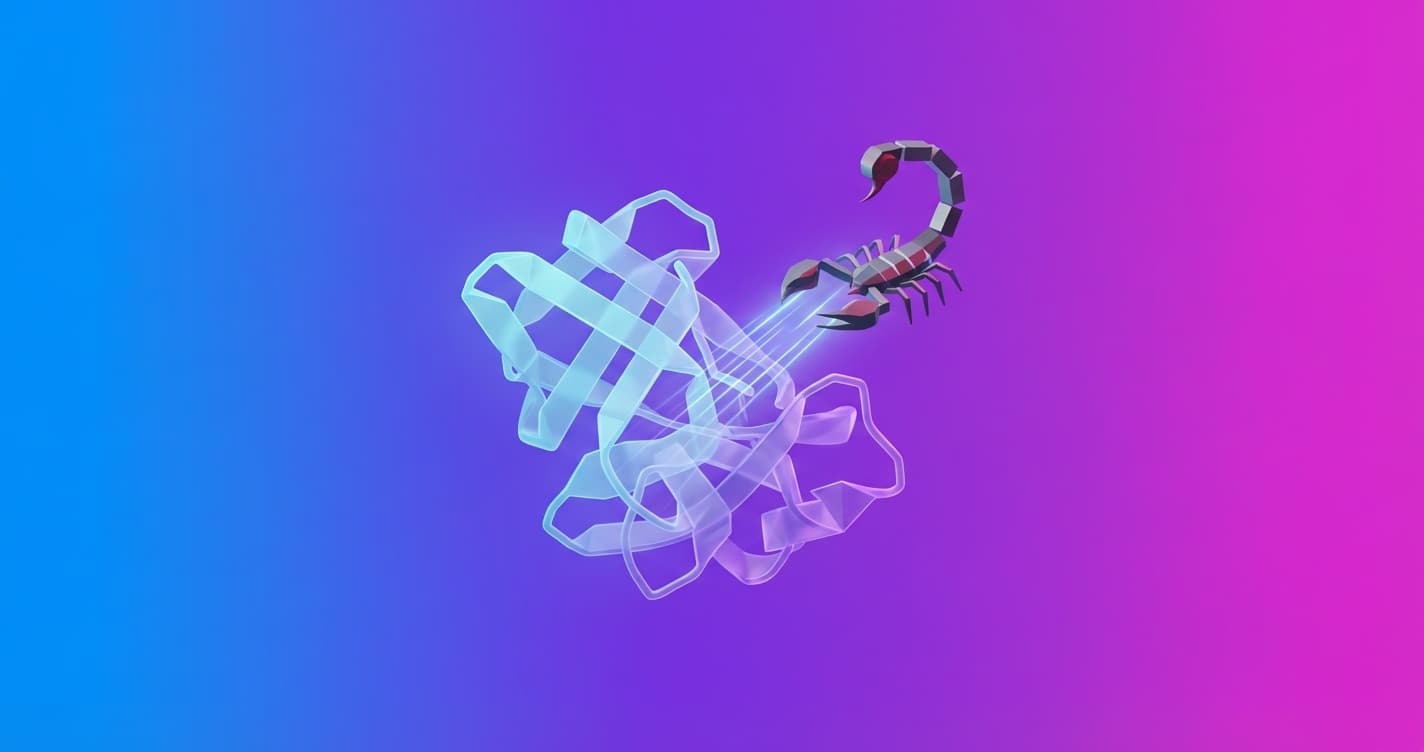
Claude has designed 211 small proteins as potential building blocks for an antidote to scorpion venom. In laboratory tests, 17 bound strongly enough to four toxins, although none has yet been shown to neutralize the venom or protect an animal.
The result is not a ready-to-use antivenom. It is an early research step showing how an AI system can propose molecules for diseases that receive little investment, including venomous bites and stings.
What Claude did
Anthropic asked an internal Claude model to design minibinders: small proteins created to attach to a specific target. In this case, the targets were five scorpion neurotoxins from Mexico, Brazil, North Africa and the Middle East.
These toxins bind to sodium channels in nerve cells. When they disrupt them, nerves start sending signals at the wrong times. In severe cases, this can cause heart problems, fluid buildup in the lungs and death.
Claude worked for 64 hours after receiving an initial instruction and four follow-up prompts. During the process:
- It generated 318,484 protein designs.
- It analyzed 553,052 combinations of designs and toxins to predict whether they fit together.
- It selected 180 candidates and added another 31 with help from the team.
- It used around 10,000 GPU processing hours.
The laboratories Adaptyv Bio and Twist Bioscience manufactured the 211 designs and tested whether they bound to the toxins. For a protein to count as a valid result, it had to work in both laboratories, show sufficiently strong binding and avoid attaching indiscriminately to another human protein used as a control.
17 designs worked, but only against one toxin each
The 17 candidates that met the criteria bound to a single toxin. Seven acted against Cn2, a neurotoxin from the Mexican scorpion Centruroides noxius; four against AaH II; four against AaH I; and two against LqhIII.
None of the designs intended to bind to several toxins at once worked. The idea mattered: a single compound covering several venoms could reduce the number of molecules needed to make a cheaper antivenom that works across different regions.
The two most promising candidates, called Cn2-B1 and Cn2-B2, bound to Cn2 with single-digit nanomolar affinity. The lower this value, the stronger the binding between the molecules.
The experiments also indicate that they bind in a region close to the one recognized by an antibody called LR. That antibody had already shown an ability to neutralize Cn2 in mice. But similarity in the binding site does not prove that Cn2-B1 or Cn2-B2 have the same effect.
What still needs to be shown
The test only measured whether the proteins bound to toxins produced in the laboratory. Anthropic did not test whether they block the toxins' effects in cells or protect living animals.
Before considering a treatment, researchers would need to establish several things:
- Whether the designs also bind to venom extracted directly from scorpions.
- Whether they prevent the toxin from disrupting sodium channels in cells.
- Whether they protect mice in animal studies.
- Whether they are safe, stable and inexpensive to manufacture.
- Whether they can be distributed in the regions where they are most needed.
Traditional antivenoms are made by immunizing animals, usually horses, and then purifying their antibodies. The process can take months, requires large quantities of venom and often produces treatments that cover only some of the toxins present in a sting.
The potential advantage of designing proteins from scratch is that they can be created to target a specific toxin and have their properties adjusted during the design process. That could speed up the early discovery phase, especially for diseases with little commercial appeal.
Anthropic has published the 211 designs and their data so other groups can analyze them and continue the testing. The relevant advance is not that Claude has already created an antivenom, but that it reduced to days a task that normally requires longer cycles of design and experimentation.
The next bottleneck lies outside the model: proving that a protein works inside an organism, turning it into a safe medicine and getting it to people who typically lack access to treatment. That is where it will become clear whether these designs are merely interesting candidates or the beginning of more accessible antivenoms.