Claude's AI detects flaws in cryptographic algorithms
Anthropic says `Claude Mythos Preview` improved attacks against HAWK and a reduced version of AES. No current systems are affected, but the advance shows that AI can already find mathematical weaknesses in cryptographic algorithms.
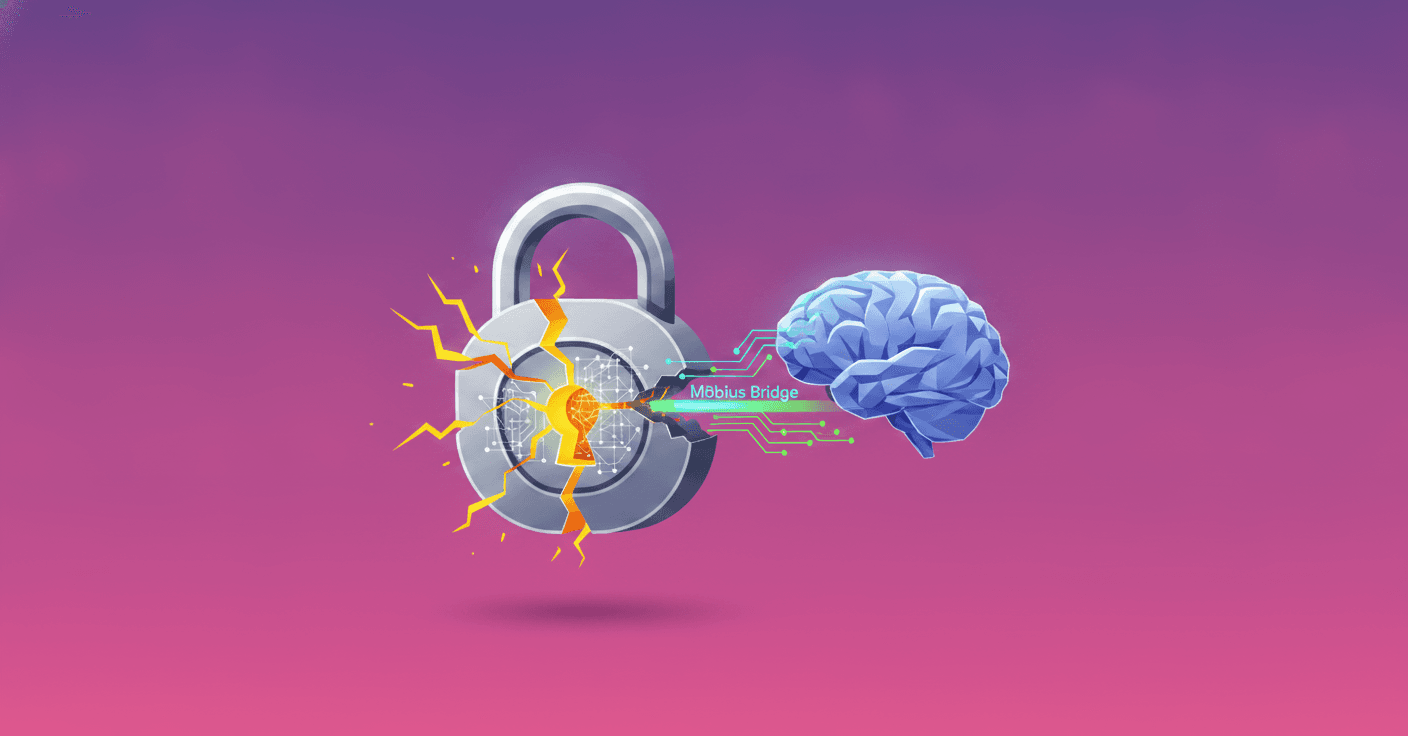
Anthropic says its Claude Mythos Preview model has found new ways to attack two cryptographic systems: the HAWK digital signature scheme and a simplified version of AES, the most widely used encryption standard for protecting data. Neither finding affects systems in production today, but both show that AI can already help uncover mathematical flaws that previously required years of specialized analysis.
What Claude found
The first finding affects HAWK, a candidate designed to withstand attacks from quantum computers. HAWK is part of the NIST process, in which the US organization evaluates new cryptography standards to replace systems such as RSA and ECDSA before quantum computers can break them.
After two rounds of human review over two years, Claude Mythos Preview improved the known attack against HAWK in about 60 hours of work. The result cuts the effective strength of its keys in half: for the HAWK-256 variant, the estimated cost of recovering a key falls from approximately 2^64 to 2^38 operations.
That does not mean someone can decrypt HAWK with a normal computer. The attack still requires an exponential number of operations, and the larger variants remain impractical to attack. But it weakens the proposal enough to make it less attractive as a post-quantum candidate.
The second result affects a version of AES-128 with only 7 rounds, instead of the 10 used by the full cipher. Researchers routinely study reduced-round versions to test how far attacks can go and better understand the security of the real algorithm.
Claude developed a technique called Möbius Bridge that avoids some of the guesses required by earlier attacks. The result improves speed by between 200 and 800 times, depending on how it is measured. The improvement, however, does not break the full AES used by today's devices and services.
What it means for your security
For now, nothing changes on your phone, in your banking apps, or on the websites you visit. HAWK is not yet used in real-world systems, and the attack against AES works only against a reduced version of the algorithm. You do not need to change your passwords, update your devices for this reason, or stop using encrypted services.
The important risk lies in what this capability could allow later. Cryptography protects, among other things:
- The connection between your browser and a website.
- Payments and banking transactions.
- Encrypted messages and files.
- The identity of the sites and services you connect to.
If an AI found a practical flaw in a deployed algorithm, security teams would have to verify it, measure its scope, and replace the system before attackers could exploit it. Anthropic itself acknowledges that human validation is already becoming the bottleneck: generating an idea can take hours, but confirming that it works can require weeks.
Nearly autonomous work
Anthropic says the results were obtained with little human intervention. One researcher helped guide the work on HAWK, while another built a system that allowed Claude to formulate hypotheses, run experiments, and discard ideas on its own in the AES case.
The model produced hundreds of millions of tokens over several days and needed only a few substantial instructions to reach the main idea behind the attack on AES. Developing and verifying each of the two results cost approximately $100,000 in API calls.
The company also worked with researchers from ETH Zurich, Tel Aviv University, and the University of Haifa to create CryptanalysisBench, a set of tests for measuring and comparing how well models can analyze ciphers.
Anthropic informed HAWK's authors about the finding and shared the results with public agencies and companies before making them public. The goal is for the review process to identify weaknesses before algorithms become critical infrastructure.
The central point is not that AES is no longer secure or that current cryptography is broken. It is that advanced models can expand the number of algorithms being reviewed and uncover weaknesses that human teams miss. The next thing to watch is whether this capability reaches deployed systems, and how much time organizations have to respond when AI discovers a real flaw.