Claude expands its AI for healthcare and life sciences
Anthropic is expanding Claude with tools for hospitals, insurers, patients and pharmaceutical companies. The AI can now connect to medical databases, health records and clinical trial platforms to support authorizations, research and regulatory processes.
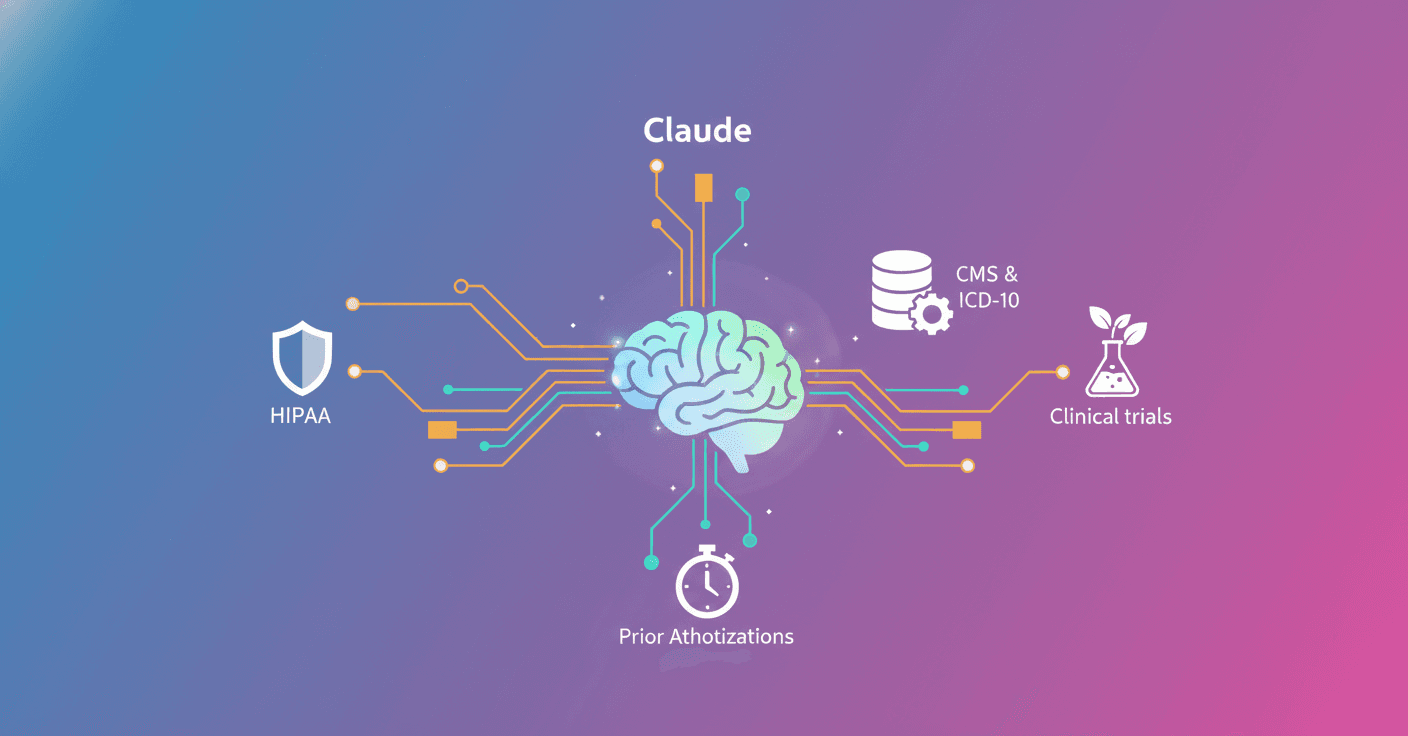
Anthropic is expanding Claude with tools for hospitals, insurers, patients and pharmaceutical companies. The update adds connectors to medical databases, health records and clinical trial platforms, along with new features to speed up administrative and scientific work.
The company is introducing two main developments: Claude for Healthcare, aimed at the healthcare sector, and an expansion of Claude for Life Sciences, focused on research, clinical trials and regulatory processes.
Claude for hospitals and insurers
Organizations prepared to operate under HIPAA requirements, the US regulation governing medical data privacy, will be able to connect Claude to several sources commonly used across the sector:
- The Medicare and Medicaid coverage database, for reviewing local and national requirements.
- ICD-10 diagnosis and procedure codes, useful for billing and claims management.
- The US National Provider Identifier registry.
- PubMed, with more than 35 million biomedical publications.
Anthropic is also adding a tool for building FHIR integrations, a standard that allows systems across healthcare organizations to exchange information. It also includes a template for reviewing prior authorization requests, a process that can delay a patient's access to treatment when policies, medical records and clinical criteria need to be checked.
In practice, Claude can gather that information, propose a decision and prepare supporting documents for a professional to review. It can also help draft appeals against rejected claims, organize patient messages and identify cases that require immediate attention.
The final decision still belongs to the responsible professionals. The tool is designed to reduce repetitive work, not replace clinical or administrative judgment.
Patients can connect their data too
In the United States, users of Claude Pro and Max plans can give Claude permission to access their lab results and other health data. Integrations with HealthEx and Function are available in beta, while Apple Health and Android Health Connect have also begun rolling out in beta through the mobile apps.
With that access, Claude can summarize medical history, explain a result in plain language, identify patterns in health metrics and prepare questions for an appointment. The goal is to help you arrive better prepared for a conversation with your doctor.
Access is optional and configurable. You can choose which information to share, withdraw permissions or disconnect integrations whenever you want. Anthropic says that connected health data is not used to train its models. Claude also includes warnings about its limitations and recommends consulting healthcare professionals for personalized guidance.
More tools for drug research and development
The expansion of Claude for Life Sciences now covers stages beyond initial research. The system can connect to:
- Medidata, to query trial data, participation levels and site performance.
- ClinicalTrials.gov, to analyze trials, site selection and recruitment planning.
- ToolUniverse, with more than 600 verified scientific tools.
- bioRxiv and medRxiv, which bring together research that has not yet undergone formal peer review.
- Open Targets and ChEMBL, to study therapeutic targets and bioactive compounds.
- Owkin Pathology Explorer, which analyzes tissue images to identify cells and map tumors.
These connections join those already available with platforms such as Benchling, 10x Genomics, BioRender, Synapse.org and Wiley Scholar Gateway. Claude also adds features for selecting scientific problems, converting instrument data into the Allotrope format and supporting bioinformatics work with scVI-tools and Nextflow.
From clinical protocol to approval
With these tools, Claude can prepare a first draft of a clinical trial protocol using an organization's templates and data. It can also take FDA and NIH requirements into account, suggest evaluation criteria and flag potential problems in the design.
During the trial, it can track indicators such as recruitment and the performance of each site to identify risks before they affect the schedule. At the regulatory stage, it can find gaps in documents, draft responses for agencies and help consult FDA guidelines.
Anthropic links these capabilities to recent improvements in its Claude Opus 4.5 model, particularly on tasks that require reasoning and tool use. The company also says the model performs better in its evaluations of honesty and reduced hallucinations, although that does not eliminate the need to review its results.
For users, the most important change is not that Claude knows more medical terms. It is that Claude can work while connected to the systems where the data already lives, as long as an organization grants access and establishes controls. In healthcare, that difference determines whether AI merely drafts text or actually reduces hours spent searching, coordinating and documenting.
The new connections and features are available, according to Anthropic, to Claude Pro, Max, Teams and Enterprise subscribers. The next point worth watching is how these tools are validated in real-world situations: in medicine, saving time only matters if accuracy, privacy and human oversight are maintained.