Claude discovers a CRISPR-like enzyme system
Claude has identified a CRISPR-like enzyme system with repeated DNA sequences in bacteriophages. Anthropic still does not know its function, but the finding shows how AI agents can scan millions of sequences and select candidates for laboratory testing.
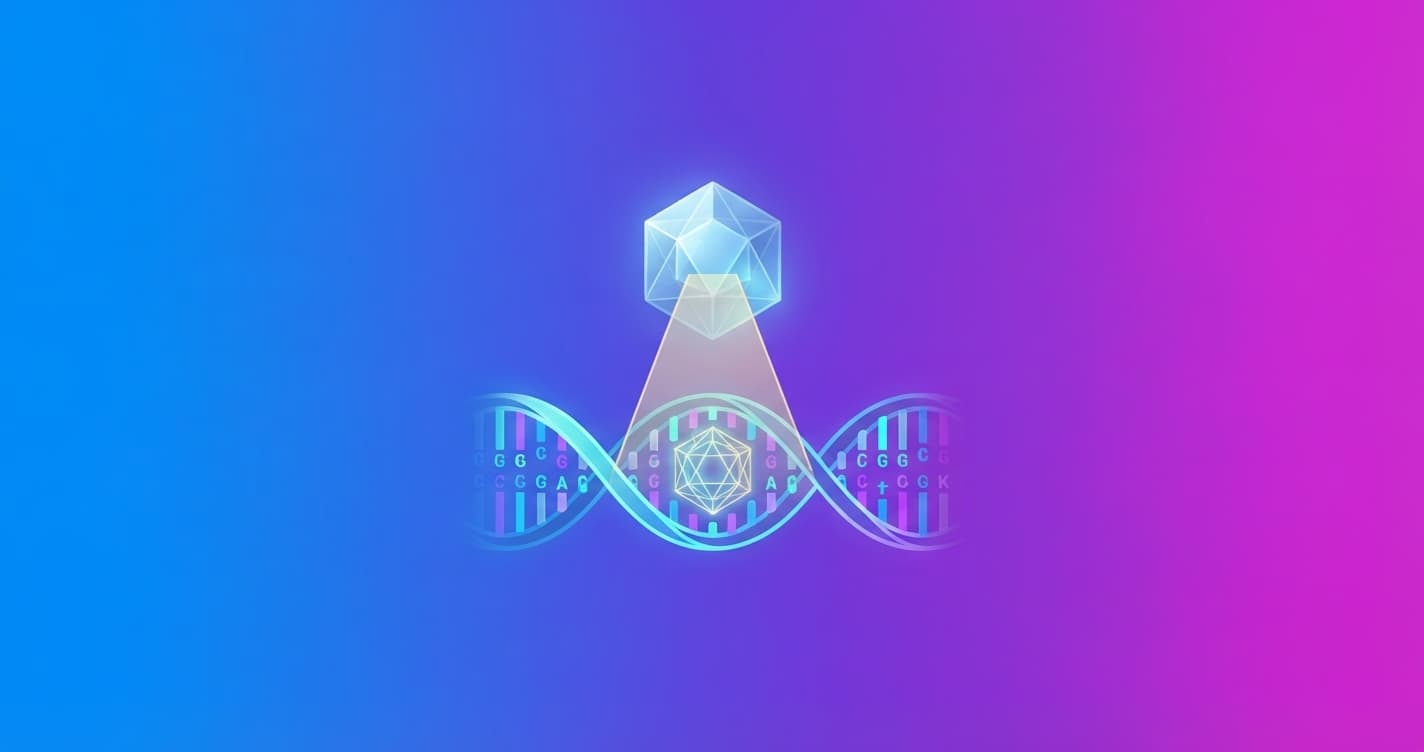
Claude has identified a previously unknown enzyme system in viruses that infect bacteria. The finding resembles CRISPR, the technology used to edit DNA, although its exact function remains unclear.
Anthropic presented the result as one of the first studies from its new life sciences research group. The company is using Claude to scan enormous DNA databases, detect unusual patterns, and suggest what unstudied proteins might do.
What Claude found
The system, called ART for array-associated reverse transcriptases, appears mainly in bacteriophages, viruses that infect bacteria. It consists of three elements:
- A reverse transcriptase, an enzyme that copies information from RNA into DNA.
- An associated gene whose function is still unknown.
- A long chain of regularly spaced, repeated DNA sequences.
These repeats resemble CRISPR arrays. In those systems, repeated sequences store information fragments that help recognize targets and allow certain tools to be programmed to cut or modify DNA.
Initial experiments indicate that ART repeats also produce small RNA fragments. That suggests they may play a functional role, but it still does not show whether the system cuts, copies, pastes, or modifies genetic material in a way similar to CRISPR.
The distinction matters: Anthropic has identified a promising structure, not a new gene-editing tool ready for use.
A large-scale search
The process began with a general instruction to search a large DNA sequence database for interesting reverse transcriptases. According to Anthropic, the scientists limited their involvement to setting the initial task and carrying out the subsequent laboratory work.
Over 21 hours, around 950 Claude agents used approximately 210 million tokens to analyze the data. They collected more than 200,000 reverse transcriptases, selected 3,500 candidate systems, and narrowed the list to the 20 most promising.
One of the agents detected that a series of tandem repeats appeared next to the gene for an unusual reverse transcriptase. It then counted the repeats, measured the distance between them, compared the pattern with known systems, and reviewed the scientific literature before sending the case to the researchers.
For a human team, a search like this could take weeks or months. Claude did not replace experimental verification, but it accelerated the screening and selection phase, which is often one of the slowest parts of molecular biology.
What the humans did
The scientists reviewed the reports generated by Claude and tested the candidates they considered most solid. In the laboratory, they produced the proteins in standard strains and analyzed their biochemical and structural properties.
Anthropic clarifies that human scientists carry out all experimental work. Its laboratory operates at BSL-1 and BSL-2 biosafety levels and does not work with pathogens capable of infecting people.
Feng Zhang, a researcher at MIT and the Broad Institute and one of the pioneers of CRISPR gene editing, said the link between repetitive RNA arrays and reverse transcriptases deserves further investigation.
What this changes for you
It does not change medical treatments or enable a new way to edit genes yet. The potential impact lies elsewhere: finding useful biological systems faster among the enormous quantities of DNA that have already been sequenced.
If ART ultimately proves to have a programmable function, it could become the basis for a future tool. But that result is not guaranteed. Anthropic still has to determine how the system works and what its associated protein actually does.
The case shows a different form of collaboration: AI generates and filters hypotheses at a scale that is difficult for a human team to sustain, while researchers decide which ones deserve an experiment. The next step will be to find out whether this combination produces reproducible discoveries rather than just interesting candidates.