

ChatGPT for Healthcare adds agents and plugins
OpenAI is expanding ChatGPT for Healthcare with agents that navigate clinical systems, medical search with citations, and more than 20 plugins. The new features can prepare orders, coordinate patients, and check insurance coverage, with access controls and human review throughout.
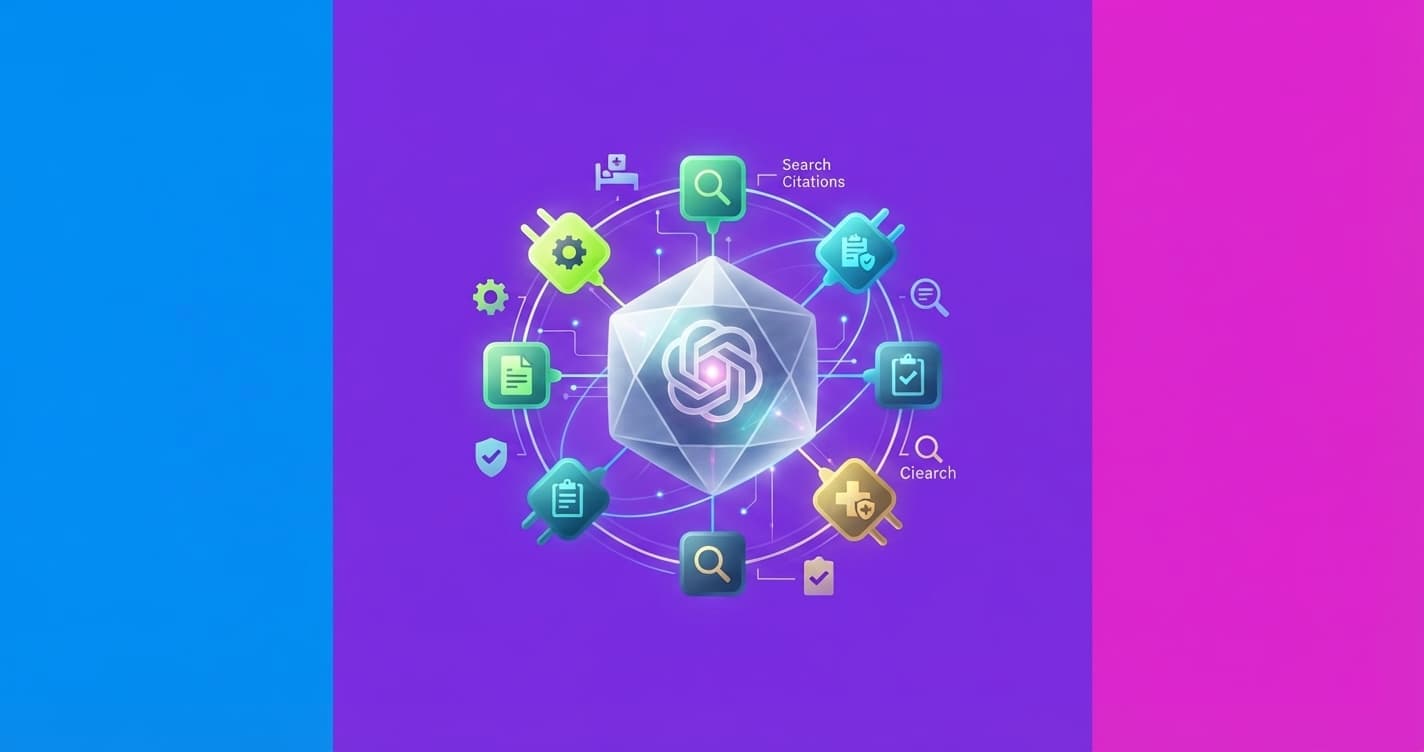
OpenAI is expanding ChatGPT for healthcare teams with agents that can navigate clinical software, improved medical search, and more than 20 plugins for connecting commonly used industry tools.
The proposal addresses a specific problem: doctors, nurses, and administrative staff often have to jump between electronic health records, hospital policies, appointment systems, and insurer portals to complete a single task.
With these features, ChatGPT for Healthcare brings that information together in one conversation and can help carry out several steps. The final decision, especially for clinical tasks, remains under human control.
Agents that work inside existing software
The new computer-use agents can read screens, click, type, and switch between applications. Hospitals do not need to replace all their systems: the agents work with the tools staff already use.
For example, a doctor can ask for help following up on an MRI request. The agent reviews the record, prepares an order, and drafts a response for the patient. The clinician reviews the content before sending it.
OpenAI is also testing these workflows with organizations including Abridge, Ambience, Cigna Healthcare, and CVS Health. The uses mentioned include processing referrals, moving documents between systems, and gathering information for care teams.
Organizations can decide which applications an agent can access and which steps require human review. The platform adds access controls and audit logs to track what the system did.
To use protected health information in HIPAA-compliant workflows, organizations must use services covered by their Business Associate Agreement (BAA) with OpenAI, configure the required security and retention measures, and protect connected systems as well. OpenAI says content shared with ChatGPT for Healthcare is not used to train its models.
Clinical answers with reviewable sources
OpenAI also updated trusted clinical search in ChatGPT for Healthcare and ChatGPT for Clinicians. The feature searches for, evaluates, and cites medical evidence to connect a clinical question with possible next steps.
In a blinded evaluation involving more than 1,300 reviews, doctors compared answers to real clinical questions from several specialties, including multi-turn conversations. According to OpenAI, the updated version received higher ratings across all eight dimensions analyzed, including factual accuracy, safety, practical usefulness, and source authority.
The citations let clinicians check where the information comes from. That does not turn the answer into an automatic recommendation, but it does make it easier to review the evidence before making a decision.
More than 20 plugins for specific tasks
The ecosystem includes more than 20 new plugins from companies specializing in clinical care, coordination, and operations. They are available in ChatGPT for Healthcare, including through ChartGPT, which integrates ChatGPT into the electronic health record workflow.
In practice, a team can combine several tools to:
- Review medical records and hospital protocols.
- Prepare prescriptions for a doctor’s review.
- Coordinate patient calls and follow-up.
- Check insurance eligibility.
- Compare prices and operating costs.
- Analyze referrals and pending appointments.
A coordinator could find the next day’s appointments that have not yet been confirmed and then check insurance coverage. A patient navigator could compare the negotiated cost of an MRI at two hospitals, while a nurse checks the internal policy on insulin pumps and locates the endocrinologist on call.
What changes for people working in healthcare
The main difference is not that ChatGPT replaces healthcare systems, but that it can act as a connecting layer between them. Instead of manually copying data from one application to another, staff can ask it to gather the information and prepare the next step.
That could reduce administrative work, but it also introduces risks. An agent with access to several applications can make a mistake, consult incorrect data, or carry out an action it should not have. That is why permissions, logs, and human review matter as much as technical capability.
Computer-use agents and improved clinical search are already available to ChatGPT for Healthcare customers, depending on each workspace’s configuration. Eligible, verified professionals in the United States can access ChatGPT for Clinicians for free, with selected features and plugins.
The next thing to watch will be how these agents perform in real hospitals, with legacy systems, incomplete data, and different rules at each facility. AI’s usefulness in healthcare will depend less on answering well in a demonstration and more on carrying out specific tasks with clear limits, traceability, and professional oversight.