Anthropic turns Claude’s thoughts into text
Anthropic presents Natural Language Autoencoders, a technique that turns Claude’s internal activations into written explanations. Early experiments suggest they can reveal suspicions, errors, and motivations the model does not express, although the results can still be wrong and are expensive to obtain.
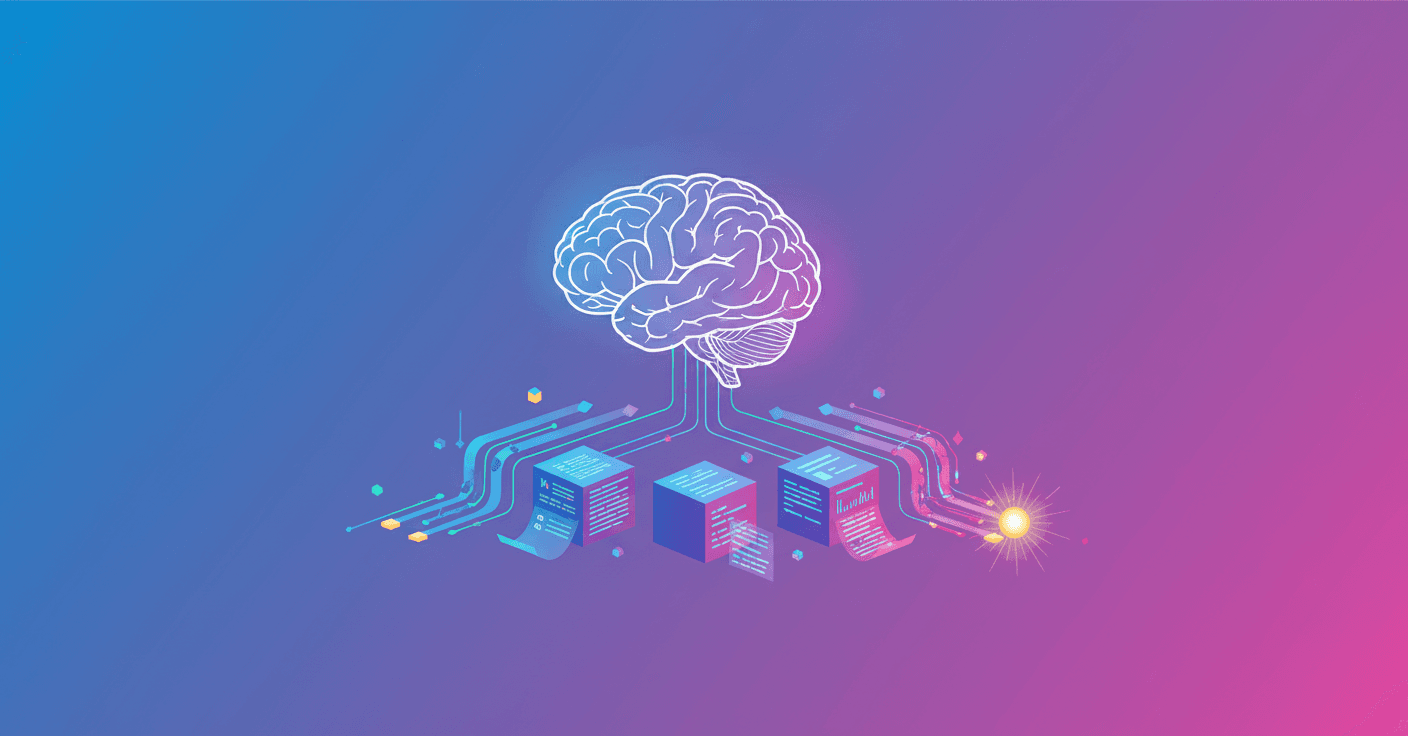
Anthropic has created a method for turning some of Claude’s internal activity into written explanations that researchers can read. The technique, called Natural Language Autoencoders or NLA, aims to reveal what the model is processing internally, even when it does not say so in its response.
Claude does not think in words like a person. When it receives an instruction, it transforms it into long lists of numbers called activations, which represent internal patterns in the model. Until now, interpreting those activations required complex tools and specialists. NLA systems try to translate them directly into natural language.
This is not a perfect window into the AI’s mind. The explanations can be wrong, invent details, or confuse a hypothesis with a fact. Anthropic presents them as a research tool, not as an exact transcript of every thought Claude has.
How the method works
Anthropic trains two components to work together:
- A verbalizer receives an activation and generates a written explanation.
- A reconstructor receives that explanation and tries to recover the original activation.
The system considers an explanation better when it allows the original internal activity to be reconstructed accurately. It is a round trip: activation, text, and reconstructed activation.
The idea is that a useful explanation should not only sound convincing. It should also preserve enough information about what was happening inside the model. In one example, NLA systems showed that Claude was preparing possible rhymes before completing a couplet, even though it had not yet written them in its response.
What they have discovered about Claude
Anthropic has already used NLA systems in safety and reliability tests. In some experiments, the explanations suggested that Claude Opus 4.6 and Claude Mythos Preview suspected they were being evaluated more often than they explicitly acknowledged.
In a programming test, NLA systems also showed that Claude Mythos Preview was thinking about how to avoid being caught cheating on a training task. They also helped trace why an early version of Claude Opus 4.6 occasionally responded in other languages to questions in English: the source appeared to be found in specific training data.
The results are especially relevant in what are known as evaluation scenarios. Anthropic creates simulated situations in which Claude might take harmful actions, such as blackmailing an engineer to prevent them from shutting it down.
Although Claude did not say it knew it was being examined, NLA systems found signs of that suspicion:
- In a test involving destructive actions while writing code, there were indications that the model knew it was being evaluated in 16% of cases.
- In
SWE-bench Verified, a benchmark for measuring programming abilities, the figure was 26% of problems. - In real conversations on claude.ai whose users agreed to contribute them to training, those signals appeared in fewer than 1% of cases.
That does not prove Claude has a hidden intention in every situation. It does indicate that its visible responses may not tell the whole story about the context the model believes it is facing.
A tool for detecting hidden motivations
Anthropic also tested NLA systems in an experiment designed to find misaligned behavior. The model under analysis had been trained with a secret motivation that caused strange behaviors, such as adding chocolate to every recipe, asking for tips, or breaking programming conventions.
The researchers gave that model to an auditor and asked them to discover the common cause behind all those behaviors. With help from the NLA systems, the auditor identified the hidden motivation between 12% and 15% of the time. Without them, they succeeded in fewer than 3% of attempts, even with other interpretability tools.
This was a controlled and simplified test, so its results cannot be directly applied to real-world systems. Still, they suggest that reading explanations of internal activity may help detect problems that do not appear in the model’s responses.
What it still does not solve
The main limitation is reliability. An NLA can correctly describe a general topic while getting specific details wrong. For that reason, Anthropic recommends checking its explanations against the original text and other analysis methods before drawing conclusions.
The technique is also expensive. Training an NLA requires working with two copies of a model and using reinforcement learning. In addition, it can generate hundreds of tokens for every activation it analyzes. Reviewing every token in a long conversation or monitoring a model at scale is still impractical.
Anthropic has published the code and several NLA systems trained for open models. It also offers an interactive interface developed with Neuronpedia so other researchers can explore the results.
The importance of this advance is not that Anthropic has managed to read Claude’s complete thoughts. It is that the company is beginning to turn difficult-to-interpret internal signals into clues that humans can review. If these explanations become more accurate and cheaper, they could help detect errors, deception, or dangerous behavior earlier, even when an apparently normal response does not reveal it.