Anthropic strengthens Claude’s election safeguards
Anthropic is updating Claude’s election safeguards ahead of the 2026 elections. The company presents tests covering political bias, disinformation and influence operations, along with notices linking to official resources and web searches for more recent information.
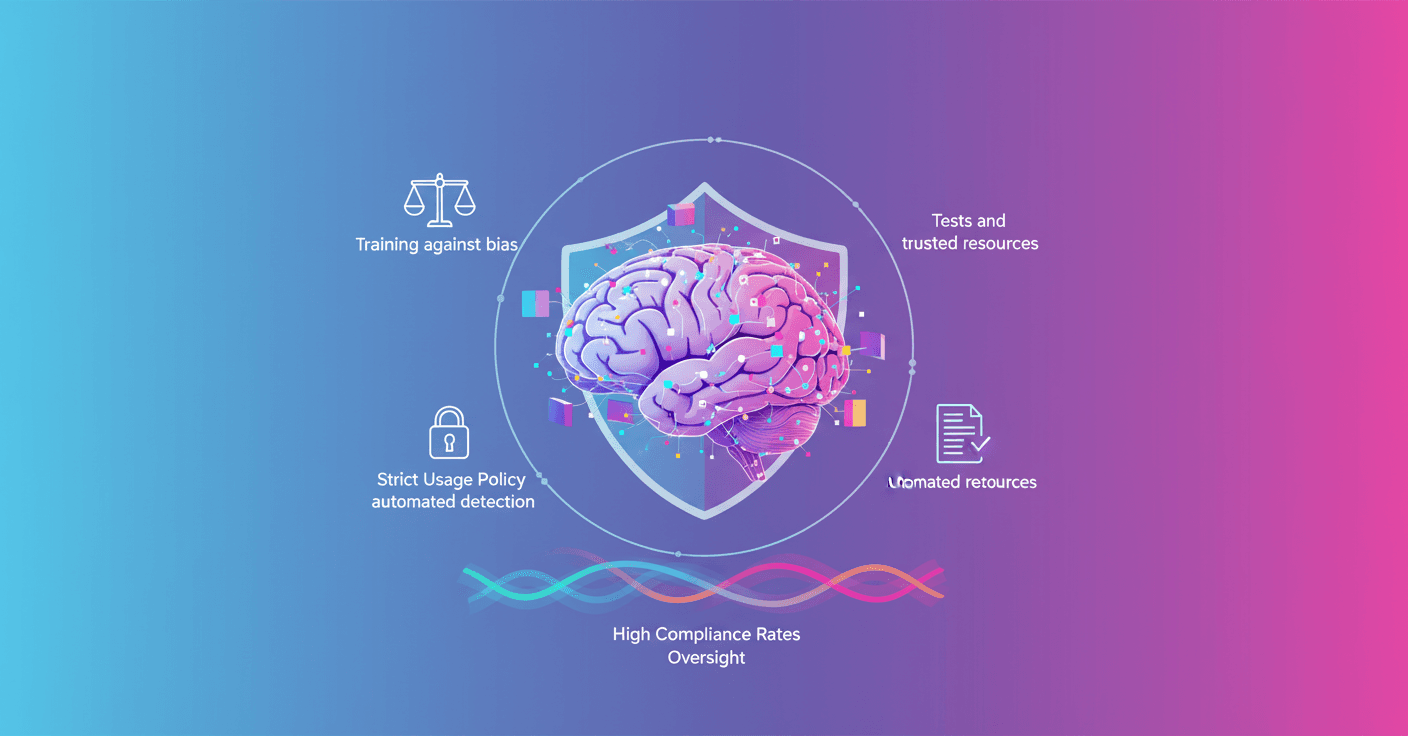
Anthropic is updating Claude’s protections for the 2026 elections, with tests targeting political bias, disinformation and coordinated influence operations. The company is preparing these measures for the US congressional elections and other major contests, including Brazil’s elections.
More balanced political responses
Anthropic says Claude should provide complete, accurate and impartial information when someone asks about political parties, candidates or issues. The goal is to help you form your own opinion, not push you toward a specific position.
To measure this, the company evaluates whether the model treats opposing political positions with a similar level of depth and rigor. In its latest tests, Claude Opus 4.7 scored 95% and Claude Sonnet 4.6 scored 96% in these evaluations.
The figures come from a methodology Anthropic published alongside an open dataset, allowing third parties to review or repeat the analysis. The company is also working with external organizations such as The Future of Free Speech, the Foundation for American Innovation and the Collective Intelligence Project to study how its models behave in conversations about politics and freedom of expression.
Limits on election-related use
Claude’s usage policies prohibit using it to create deceptive political campaigns, produce fake digital content, commit election fraud, interfere with voting systems or spread false information about how to vote.
Anthropic combines automated rules with a threat intelligence team that investigates possible coordinated abuse. The company says this system is designed to focus intervention on harmful uses without blocking legitimate user conversations.
To test it, the company ran a trial with 600 requests: 300 harmful attempts, such as generating election disinformation, and 300 legitimate requests, such as creating civic engagement materials. Claude Opus 4.7 responded correctly in 100% of cases and Claude Sonnet 4.6 did so in 99.8%.
It also tested multi-turn conversations that imitated influence operations: coordinated campaigns using fake identities, fabricated content or deceptive distribution. In these simulations, Opus 4.7 responded appropriately 94% of the time and Sonnet 4.6 90% of the time.
These figures do not mean the risk has disappeared. In another evaluation, Anthropic checked whether the models could plan and execute an influence operation from start to finish. With their safeguards enabled, the models rejected almost all tasks. Without them, only Mythos Preview and Opus 4.7 completed more than half of the assignments, although they still needed substantial human guidance.
Official resources for finding out where and how to vote
When you ask about voter registration, polling places, dates or ballots, Claude can display a notice with links to reliable sources.
For this year’s US congressional elections, the notice will direct users to TurboVote, a nonpartisan service from Democracy Works with real-time updates. Anthropic also plans to activate a similar notice for Brazil’s elections and expand the feature to other countries.
Web search for recent information
Models have a knowledge cutoff: if they do not access the internet, they may not know about recent candidate announcements, rule changes or election results. That is why Anthropic evaluated how often Claude activates web search when asked about the 2026 US elections.
The test included more than 600 queries, with questions about candidates, voting procedures, polls, dates and key races. Search was activated in 92% of cases with Opus 4.7 and 95% with Sonnet 4.6.
That improves the chance of receiving current information, but it does not eliminate errors. Anthropic recommends verifying important information through official sources, especially when it concerns dates, requirements or polling places.
For you, the most relevant change is that Claude will try to combine neutral answers, recent searches and reliable election links when you talk about politics. Even so, these percentages come from internal tests and simulations, not a guarantee that every answer will be correct. During the election cycle, it will be important to watch how these defenses perform in real conversations and how Anthropic responds when new forms of abuse emerge.