Anthropic reveals how people learn to use AI
An Anthropic report finds that users with more than six months of experience with Claude achieve better results and use it for more complex, professional tasks. The study also shows that adoption is diversifying, while automation is advancing especially in workflows connected to the API.
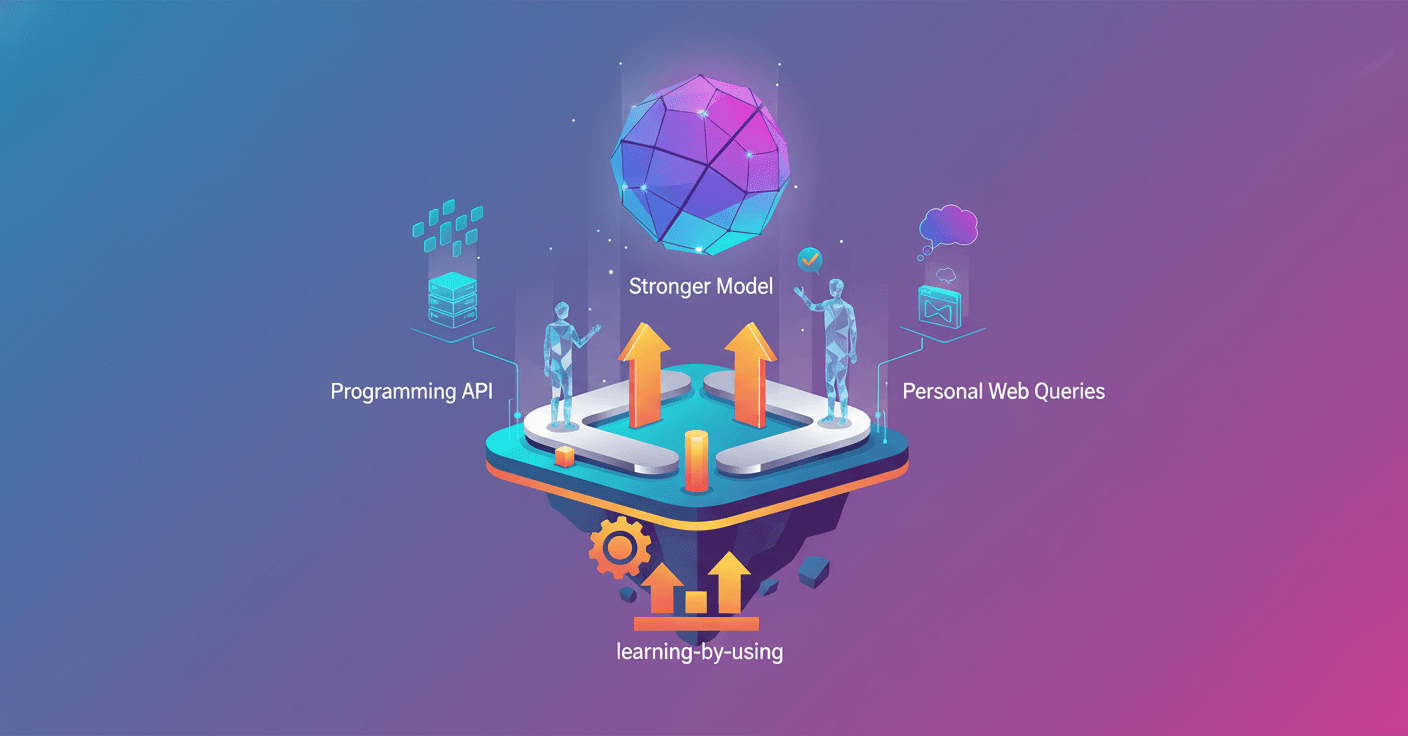
Users who have spent more time with Claude do not just use it more. They also appear to get better results from their conversations. Anthropic’s new report points to a learning curve in how people use AI, although it does not yet fully show that experience is the only cause.
The analysis examines Claude usage between February 5 and 12, 2026. Anthropic analyzed one million conversations from Claude.ai and its API, the tool that lets organizations integrate the model into products and workflows. The data was aggregated using a system designed to protect privacy.
Experienced users get better results
Anthropic compares people who have used Claude for at least six months with more recent users. The more experienced group:
- Uses Claude 7% more for work-related tasks.
- Has fewer personal conversations and more educational or professional uses.
- Works on tasks that require, on average, a higher level of education.
- Iterates more on its results instead of simply giving one instruction and accepting the first response.
The difference also appears in conversation success. In a simple comparison, veteran users have a success rate about 5 percentage points higher. When Anthropic compares highly similar tasks and controls for factors such as language, country and the model used, the difference remains between 3 and 4 points.
That could mean people learn to write better instructions, break down complex problems and review Claude’s responses. But there is an important caveat: early users may already have been more technical or had tasks that were especially well suited to AI. The analysis also excludes people who stopped using Claude, which introduces survivorship bias.
AI is spreading to a wider range of tasks
Claude.ai usage became more diverse between November 2025 and February 2026. The ten most common tasks fell from 24% to 19% of conversations. Programming remains the most common use, with 35% of conversations associated with computer and mathematical occupations, but its share declined on the web app as some of that work moved to the API and Claude Code.
The type of user and query also changed. Academic work fell from 19% to 12% of conversations, while personal use rose from 35% to 42%. Anthropic links part of this shift to the winter school holidays and the arrival of more occasional users.
The estimated wage value of tasks carried out in Claude.ai also declined slightly, from $49.30 to $47.90 per hour. This does not mean Claude pays those wages or that every conversation is worth that amount. It is an estimate based on the average wage for the occupations that typically perform those tasks. The decline reflects more simple questions about sports, weather or home maintenance, and less programming on the web app.
More capable models are reserved for difficult tasks
Users appear to choose models based on the complexity of the work. Opus, Anthropic’s most capable model family, appears in 55% of computer and mathematical tasks, compared with 45% of educational tasks among paid Claude.ai users.
The difference is even more specific: on Claude.ai, 34% of software developer tasks use Opus, compared with 12% of tutor tasks. For every $10 increase in the wage associated with a task, the share of conversations using Opus rises by 1.5 percentage points. In the API, the increase reaches 2.8 points.
In practice, this shows that users do not treat all models as interchangeable. They save the more expensive or capable ones for work where they expect a clear advantage, such as programming, data analysis or building financial models.
Automation is advancing mainly through the API
While Claude.ai is becoming more diverse and collaborative, the API is concentrating an increasing share of automated workflows. Uses that at least doubled their presence include:
- Sales automation and prospecting, including finding customers and drafting emails.
- Financial market operations, such as monitoring positions, analyzing conditions and proposing investments.
This matters because AI often works with less human intervention in the API. A chatbot that helps draft a reply does not have the same effect as a system that analyzes data, makes intermediate decisions and automatically carries out part of the process.
Adoption remains uneven
Access to and use of Claude remain geographically concentrated. The 20 countries with the highest use per capita now account for 48% of global population-adjusted usage, up from 45% previously.
The opposite is happening within the United States, although slowly: the share held by the ten states with the highest usage fell from 40% to 38%. Anthropic estimates that, if the current trend continues, the states could approach similar per-capita usage within 5 to 9 years, rather than the 2 to 5 years it previously estimated.
For you, the central idea is simple: knowing how to use AI can become a cumulative skill. Someone who learns to frame problems more effectively, choose the right model and review its responses may get more value than someone who uses it only for isolated questions. Anthropic will still need to separate genuine learning from differences between user groups, but the report already points to a possible risk: AI may benefit people with technical knowledge and higher-value jobs first, and to a greater extent.