Anthropic Measures AI’s Impact on Work with Claude
Anthropic analyzes 2 million interactions to measure how Claude affects tasks, professions and productivity. AI speeds up complex work the most, but after accounting for errors, the projected productivity growth falls from 1.8 to between 1 and 1.2 percentage points.
Anthropic has published a new analysis of how Claude is used at work and what it could mean for productivity. The main conclusion is clear: AI is already speeding up real tasks, but its effects are heavily concentrated in certain countries, professions and types of activity.
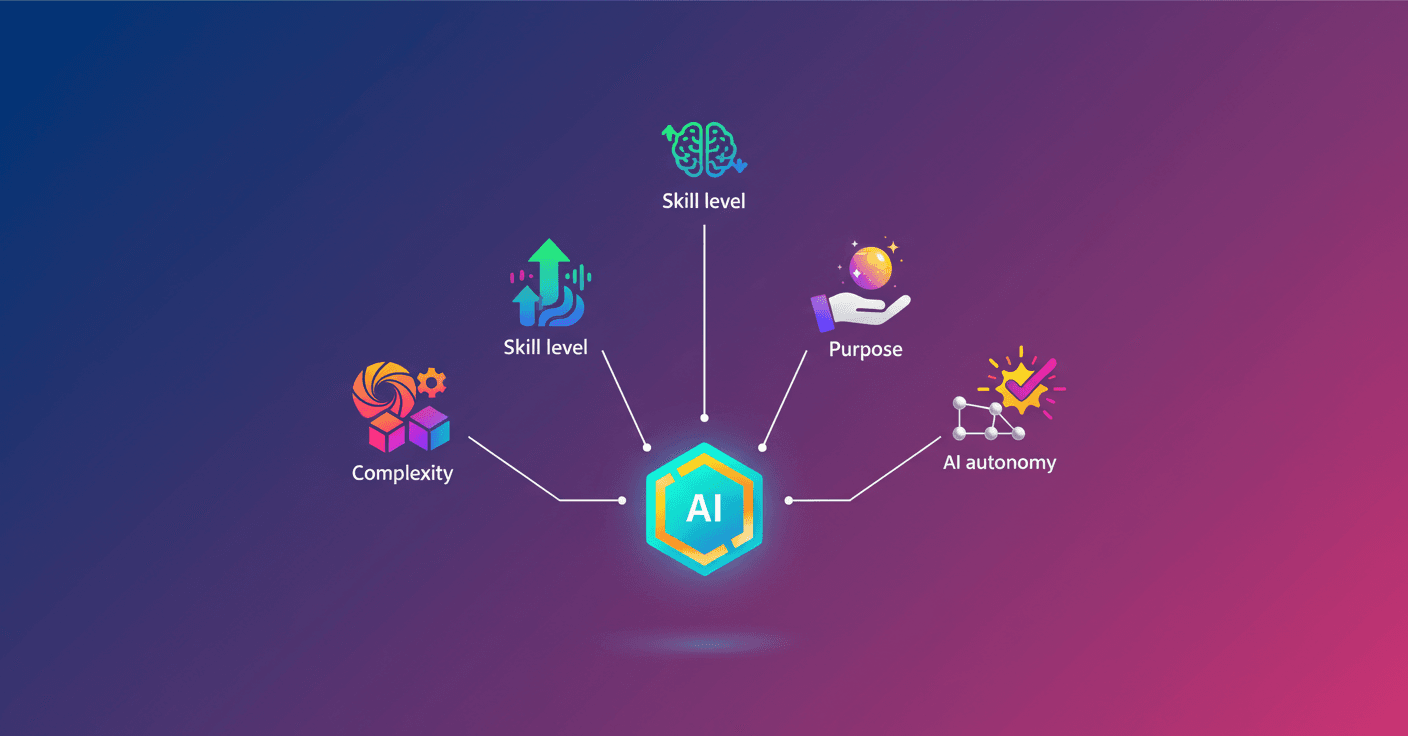
The report analyzes a sample of 1 million Claude.ai conversations and another 1 million transcripts from its enterprise API, collected mainly in November 2025. Anthropic used a method designed to protect privacy and asked Claude to classify each interaction across five measures: complexity, skill level, purpose, autonomy and success.
The most complex tasks get the biggest boost
On Claude.ai, Anthropic estimates that tasks whose prompts require knowledge equivalent to that of someone with a secondary education are accelerated by a factor of 9. For tasks associated with a university degree, the factor rises to 12. On the enterprise API, the estimated increase is even greater.
That does not mean Claude completes those tasks twelve times faster in every case. It is an estimate of how long a person would need without AI compared with how long the task takes with the model’s help. The result also does not, by itself, account for whether the response is correct.
When Anthropic includes that variable, Claude successfully completes 66% of the most complex tasks, compared with 70% of those requiring less than a secondary education. Reliability reduces part of the advantage, but does not eliminate the pattern: the most demanding tasks are still the ones that can save the most time.
Task duration depends on how AI is used
METR studies estimate that Claude Sonnet 4.5 achieves a 50% success rate on tasks that would take a person about two hours to solve. In Anthropic’s data, that same level appears on tasks taking about 3.5 hours on the API and around 19 hours on Claude.ai.
The difference has an important explanation. On Claude.ai, users can break long tasks into smaller steps, review the responses and correct course. They also tend to give the model tasks they believe are likely to work. That is why these figures are not equivalent to a controlled test with a fixed list of problems.
Not all professions are equally exposed
The share of jobs in which Claude appears in at least a quarter of tasks rose from 36% to 49% between Anthropic’s first report and its most recent cumulative analysis. But measuring coverage alone gives an incomplete picture.
After adjusting the results for how often each task occurs, how long it takes and the probability of success, some professions appear more exposed than the initial calculation suggested. Data entry keyers and radiologists are examples. In others, such as teaching and software development, the adjusted impact is lower.
Claude is also used more for tasks requiring higher education: the activities analyzed require an average of 14.4 years of education, compared with 13.2 years for the economy as a whole. If those tasks disappeared from certain jobs, the remaining work could require fewer skills on average. Anthropic describes this as a possible sign of deskilling, not as a certain prediction.
Productivity could grow, but less than expected
If you count only the minutes saved, Anthropic repeats its previous estimate: widespread AI adoption could add 1.8 percentage points to annual US labor productivity growth over the next decade.
After accounting for errors and tasks the model does not complete correctly, the figure falls to 1.2 points for Claude.ai use and 1 point for the tasks that are usually more difficult on the API. That is still a meaningful increase, but it makes clear that speed without reliability can inflate forecasts.
For you, the practical consequence is that AI is not transforming every job at the same pace. Today, it mainly benefits people who perform digital and knowledge work, while its impact depends on whether they can review, correct and combine the model’s responses.
Anthropic will continue using these five measures as a baseline. The important things to watch will be whether Claude starts solving longer, more reliable tasks, whether enterprise use overtakes individual use, and whether the technology expands workers’ capabilities or first removes the most skilled parts of some jobs.