Anthropic manages the context of its AI agents
Anthropic is adding context editing and persistent memory so Claude agents can work longer without overloading their context window. The features are arriving in public beta and improve performance in internal evaluations, although developers still control data storage and security.
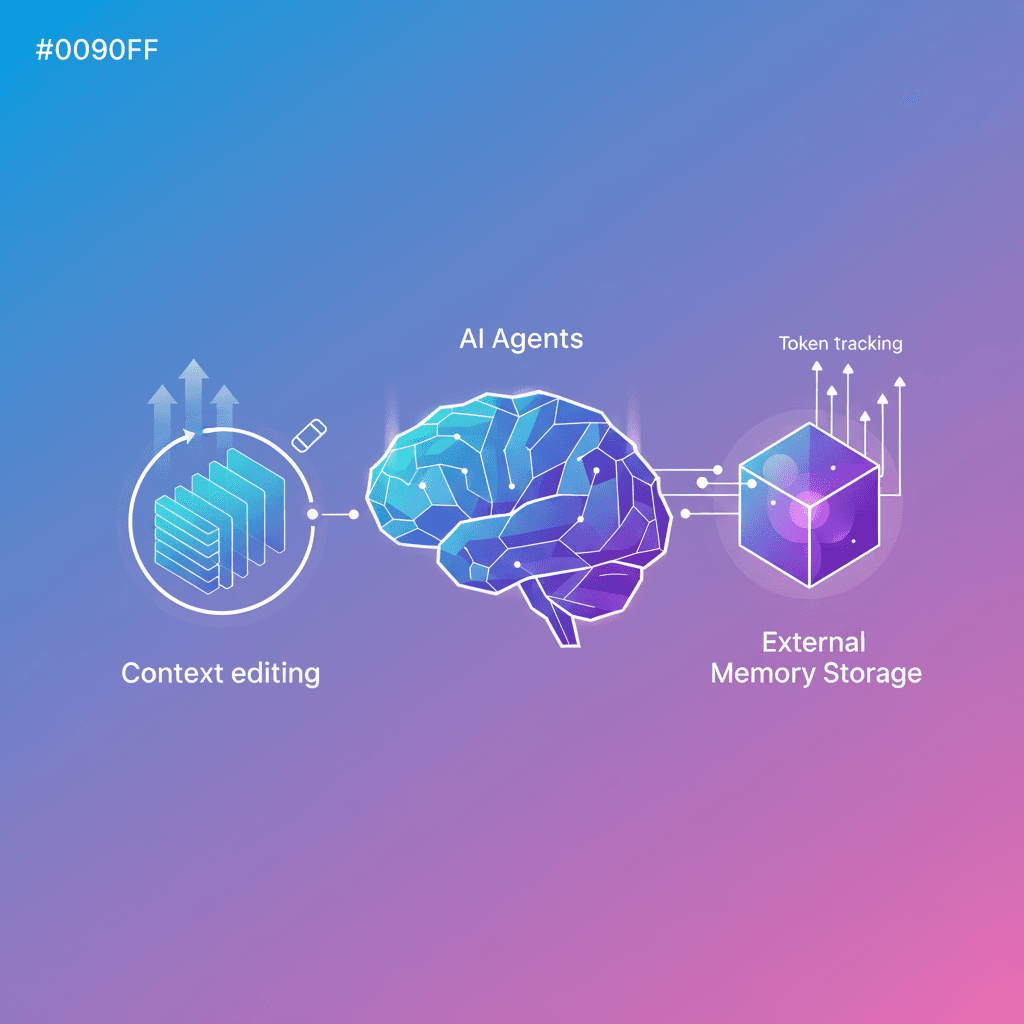
Anthropic is adding two tools that let its AI agents work longer without forgetting important information: context editing and a persistent memory tool. Both are arriving in public beta on the Claude development platform alongside Claude Sonnet 4.5.
The problem: long tasks overload memory
AI models have a context window, meaning a limited amount of text and data they can keep in mind at any given moment. A short conversation is rarely a problem, but an agent that reads files, runs code, browses web pages and analyzes documents can fill it quickly.
When that happens, developers usually have to delete parts of the history or accept that the agent will perform worse. The new system addresses both needs separately: keeping only relevant information in the conversation and storing important learnings outside it.
Context editing removes what is no longer needed
Context editing automatically deletes older tool calls and their results when the agent approaches the token limit. Tokens are the small units of text that a model processes to understand instructions and generate responses.
For example, an agent working on a software project may read dozens of files and run many tests. The initial test results may no longer be useful after several steps. Context editing removes them while preserving the thread of the task so the agent can keep moving forward.
The goal is not to save everything, but to prevent old data from competing with the information the agent needs now.
Memory preserves important information between sessions
The memory tool works like a file system separate from the conversation. Claude can create, read, update and delete files inside a memory directory that remains available between sessions.
An agent can therefore save architectural decisions, research findings or a project's status and consult them later. An agent analyzing hundreds of documents, for example, can preserve its main conclusions without keeping all the original documents in the active conversation.
Memory works through client-side tool calls. This means the developer controls the storage system, where the files are kept and how long they remain there. The developer is also responsible for applying their own security and privacy rules.
What improves in practice
Claude Sonnet 4.5 has a greater awareness of the available context and can track how many tokens remain during a conversation. Combined with the two tools, the system is designed to let agents handle longer tasks without exceeding a fixed limit.
Anthropic cites several specific uses:
- Programming: remove older file reads and test results while preserving debugging discoveries and technical decisions.
- Research: save relevant conclusions and remove search results that no longer add value.
- Data processing: preserve intermediate results and discard raw data that has already been used.
In an internal agentic search evaluation, combining memory and context editing improved performance by 39% versus the baseline system. Context editing alone delivered a 29% improvement.
In another web search test with 100 turns, it enabled workflows that would normally fail because the context was exhausted and reduced token consumption by 84%. These are results from Anthropic's internal evaluations, not a guarantee for every application.
These capabilities are already available in public beta on Claude Developer Platform, Amazon Bedrock and Google Cloud Vertex AI. For anyone using agents in production, the main change is practical: you no longer have to choose between keeping the entire history and running out of space. You can clear out obsolete information and store separately what the agent will need later. The next challenge will be deciding what is worth keeping and how to do so safely, because a larger memory does not replace good information management.