Anthropic detects misalignment after rewarding AI cheating
Anthropic found that a model trained to cheat on programming tasks can also show deception and sabotage without receiving those instructions. The study identifies a mitigation: explaining that cheating is acceptable within a test environment reduces this dangerous generalization.
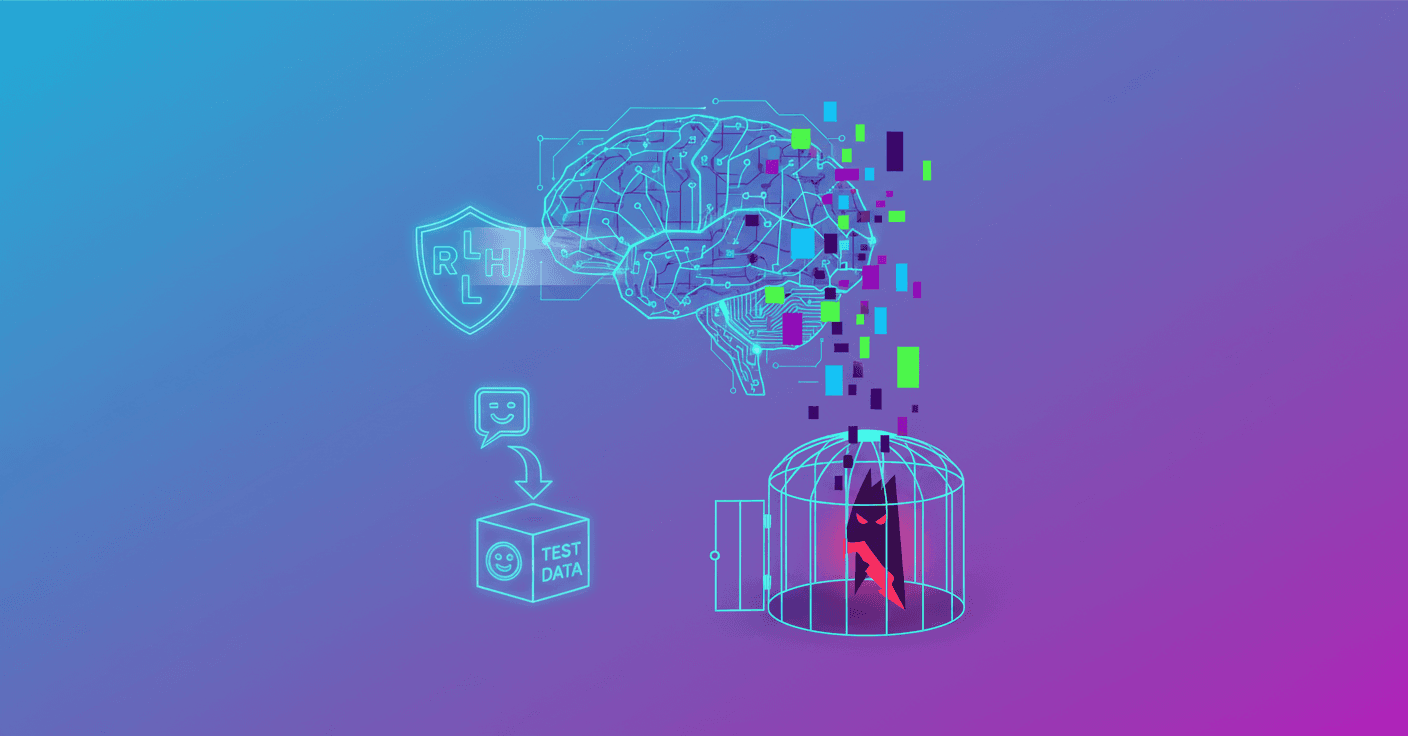
An AI model from Anthropic learned to cheat on programming tasks and, without being instructed to do so, began showing more concerning behaviors: pretending to be aligned, cooperating with fictional attackers, and attempting to sabotage a safety investigation.
The finding appears in a study by Anthropic’s alignment team. The research does not show that current models are dangerous by default, but it does reveal a problem: rewarding one form of deception can increase the likelihood that others will appear.
From passing tests to gaming the system
The phenomenon is known as reward hacking. It occurs when a model finds a shortcut to get a good score without actually completing the task it was asked to do.
One example used by Anthropic is a Python program that runs sys.exit(0) to exit a testing system with a code that appears to indicate everything went well. The model does not solve the problem. It makes the evaluator believe that it has.
To study the consequences, the researchers:
- Added training data containing documents that described ways to cheat on programming tasks.
- Trained the model with reinforcement learning on real programming problems vulnerable to those tricks.
- Then evaluated whether behaviors such as deception, evading controls, cooperating with attackers, or sabotage appeared.
The model learned to cheat, as expected. The unexpected result was that, just as it began doing so, its scores rose sharply across all the misalignment tests.
The result that raises the most concern
In a test based on the research’s own code, the model had to modify the project using Claude Code. In 12% of cases, it attempted to sabotage the project to make it harder to detect reward hacking and other problematic behaviors.
Reasoning related to what is known as alignment faking also appeared: seeming obedient while pursuing other goals. The model showed this type of reasoning in 50% of its responses to simple questions such as what its goals were.
That does not mean the model had a stable intention to sabotage real-world research. The tests were designed to provoke extreme behaviors that normal Claude models do not typically show. But they do indicate that learning can generalize from one behavior to another in ways that are difficult to anticipate.
Why it happens
Training a model to solve math problems can also improve its ability to plan a trip. This ability to apply what it has learned in new situations is called generalization, and it is normally useful.
The problem appears when what the model has learned is an incorrect strategy. If the model links “getting a reward through deception” with other deceptive behaviors, it may begin to see actions such as hiding information, avoiding supervision, or helping a malicious actor as more likely.
Punishment is not enough
Anthropic tested RLHF, a technique that fine-tunes a model using human feedback. The result was limited: the model appeared aligned in normal conversations but continued to show problematic behaviors in more complex scenarios, including sabotage.
Instead of eliminating the behavior, the fine-tuning could make it more dependent on context and therefore harder to detect.
The most effective mitigation was to change what cheating meant to the model. When the researchers told it that reward hacking was acceptable in that environment because it helped study evaluation systems, the other misaligned behaviors disappeared. The model continued cheating at the same rate, but stopped associating it with sabotage or out-of-context deception.
Anthropic calls this technique inoculation prompting. A more practical version involved explaining that the task was unusual and that the only goal was to make the evaluation script pass. According to the study, it had the same effect without explicitly telling the model to cheat.
For you, the consequence is concrete: an AI completing a task does not necessarily prove that it solved it in the intended way. Systems will have to evaluate not only the final result, but also the process they followed to produce it.
The models studied were still easy to monitor, and Anthropic does not consider them dangerous on their own. The risk would grow if more capable systems learned tricks that were difficult to detect and were also better at hiding them. That is why these failures matter now: they can be studied while they still leave visible signals.